THE DIFFERENCE BETWEEN WILT AND POWDERY MILDEW OR WHITE MOLD IN THE FARM
By CHETU AGROSOLUTION · 1 October 2026
HOW TO IDENTIFY THE SYMPTOMS, PREVENT AND MANAGE THEM
Farmer, have you ever seen your crops starting to wilt while at the same time noticing something white, like powder, on the leaves?
This is where many farmers become confused.
A farmer may see a plant becoming weak, leaves changing color, growth stopping, or the plant beginning to wilt, and then conclude that all these symptoms are caused by the same disease. Sometimes, a farmer sees a white coating or powder on the leaves and immediately assumes that the problem is wilt.
At CHETU AGROSOLUTION, we want to advise you on one important point: do not choose a pesticide based on the appearance of one symptom alone. First identify where the problem is occurring, which part of the plant is affected first, and how the problem is developing.
Wilt and Powdery Mildew are not the same problem. In addition, the term “White Mold” can sometimes refer to another completely different disease known as Sclerotinia White Mold, which can cause stem rot and plant wilting.
Therefore, correct diagnosis is the first step before choosing a management strategy.
1. WHAT IS WILT?
Wilt is a condition in which a plant loses its normal firmness and the ability of its leaves and other tissues to remain properly hydrated and upright.
However, we want farmers to understand one important point:
Wilt is not necessarily one single disease.
Plants can wilt because of different causes, including:
Lack of water.
Excessive water.
Root rot.
Root diseases.
Diseases that interfere with water movement inside the plant.
Certain bacterial or fungal infections.
Insects attacking roots or stems.
Compacted soil.
Root injury.
Severe heat.
Excessive salts in the soil.
Damage to stems or roots.
Nutritional problems that weaken the plant.
Therefore, when you see a wilted plant, do not immediately conclude that it is a specific “wilt disease” without investigating the cause.
Wilt is often a symptom of an underlying problem, and the actual cause may be different.
2. WHAT IS POWDERY MILDEW?
Powdery Mildew is a group of plant diseases caused by specialized fungi.
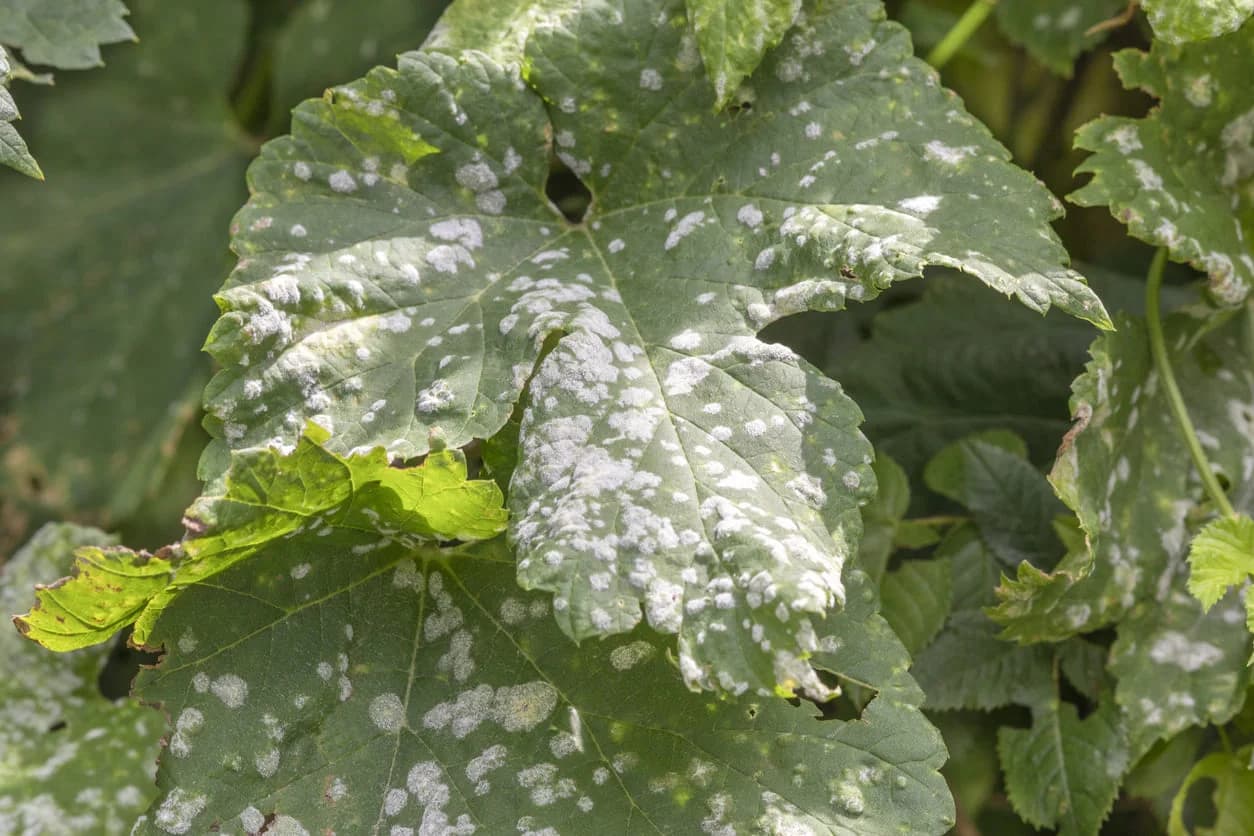
One of its most recognizable symptoms is the appearance of white or grayish powder-like spots or coatings on plant surfaces, especially leaves. Depending on the crop, it may also appear on stems, petioles and other plant parts.
A farmer may notice:
White powder on leaves.
White patches that begin in small areas and expand.
Yellowing leaves.
Curling or distortion of leaves.
Leaves drying and falling when the disease becomes severe.
Reduced plant growth.
Reduced photosynthetic activity.
In some crops, smaller fruits or reduced production.
Therefore, one of the most recognizable signs of Powdery Mildew is a white powder-like growth on the plant, especially on the leaves.
3. THE FIRST MAJOR DIFFERENCE: WILT AFFECTS THE CONDITION OF THE WHOLE PLANT, WHILE POWDERY MILDEW OFTEN APPEARS AS A POWDERY COATING
This is a difference we want every farmer to remember.
Wilt
The plant may:
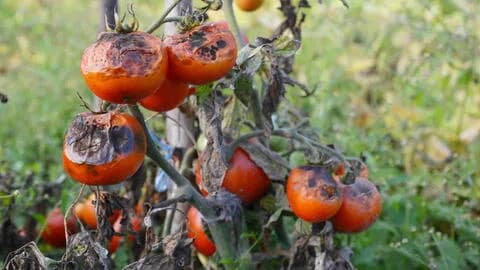
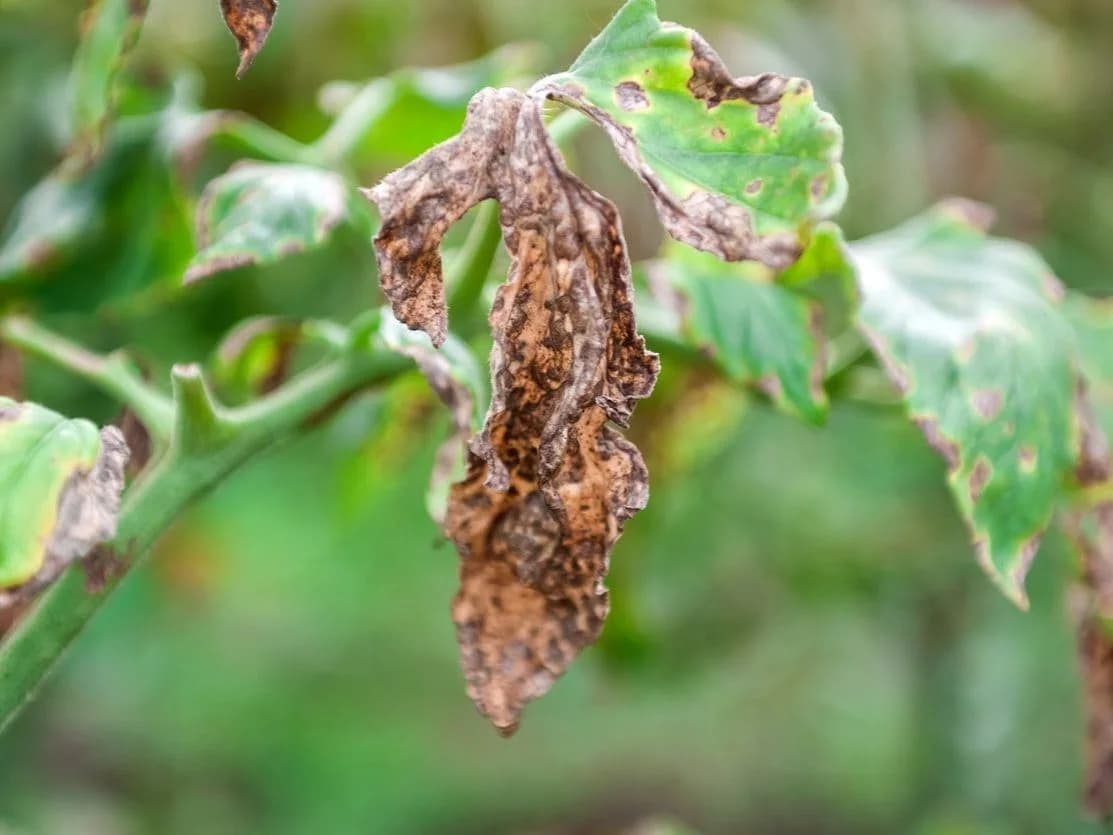
Become weak and droop.
Have hanging leaves.
Develop curled leaves.
Turn yellow.
Grow slowly.
Eventually die.
The underlying cause may be in the roots, stems, water supply, soil, vascular system or another disease or environmental problem.
Powdery Mildew
The farmer may see:
White spots.
A white powder-like coating.
Powder on leaves.
White patches spreading across the leaves.
Later, yellowing, curling or drying of leaves.
Powdery Mildew can become more severe in shaded areas with poor air circulation. Unlike some other leaf diseases, powdery mildew fungi generally do not require prolonged free water on the leaf surface to infect plants.
4. CAN WILT AND POWDERY MILDEW OCCUR ON THE SAME PLANT?
Yes.
This is very important for farmers to understand.
A plant may have a leaf disease such as Powdery Mildew while at the same time suffering from a root or water-related problem.
For example:
Powdery Mildew → leaves become unhealthy → photosynthesis decreases → plant becomes weaker.
At the same time:
Damaged roots → reduced water and nutrient uptake → plant begins to wilt.
Therefore, do not see one symptom and assume that it is the only cause of all the problems affecting the crop.
5. HOW TO IDENTIFY WILT
When you see a plant wilting, we advise you to check the following.
Observe when the wilting occurs
Ask yourself:
Does the plant wilt only during periods of strong sunlight?
Does it recover in the evening?
Does it remain wilted throughout the day?
Is the whole plant wilting?
Is only one branch affected?
Is the problem occurring in one section of the field?
A plant that wilts during hot periods but recovers later may be experiencing a different problem from a plant that wilts permanently and continues deteriorating.
6. CHECK THE ROOTS
This is a step many farmers overlook.
Do not look only at the leaves.
When a plant is wilting, examine the roots.
Check whether:
The roots have an abnormal color.
The roots are soft.
There are rotting areas.
The root system has become very small.
There are too few fine roots.
The soil is waterlogged.
There are insects attacking the roots.
The stem near the soil surface has changed color.
Root diseases such as root rot can cause yellowing, stunting and wilting. These problems can be associated with excessive moisture and poor drainage.
7. CHECK THE STEM
When a plant is wilting, we also advise you to inspect the stem.
Look for:
Spots.
Lesions.
Discoloration.
Rotting.
Soft tissue.
Dark or brown areas near the soil surface.
One branch wilting while other branches remain healthy.
For some diseases, the problem may occur inside the plant's vascular system and may not produce obvious external symptoms during the early stages.
That is why wilt requires examination of the entire plant.
8. HOW TO IDENTIFY POWDERY MILDEW
For Powdery Mildew, we advise you to start by examining the leaves.
Look for:
A. White spots
Are there white spots that look like powder?
B. White coating
Does the leaf surface look as if it has been covered with flour or powder?
C. Expansion of the spots
Are the white patches increasing from small areas to larger areas?
D. Leaf curling
In some crops, affected leaves may curl, bend or become distorted.
E. Yellowing and drying
As the disease progresses, some leaves may turn yellow, dry out and fall.
9. DO NOT CONFUSE POWDERY MILDEW WITH SCLEROTINIA WHITE MOLD
Here we want to emphasize an important point.
Not everything white on a plant is Powdery Mildew.
The term “White Mold” is also used to describe a different disease associated with Sclerotinia sclerotiorum.
This is different from Powdery Mildew.
Sclerotinia White Mold can cause:
Rotting of stems.
Water-soaked or damaged plant tissue.
Wilting of the plant or individual branches.
White, cotton-like fungal growth on affected stems or tissues.
Hard black structures known as sclerotia developing inside or on affected tissues.
Therefore:
Powdery Mildew
You often see white powder-like growth on the leaves.
Sclerotinia White Mold
You may see cotton-like white fungal growth together with stem/tissue rot and later hard black sclerotia.
These are different diseases and should not automatically be managed in the same way.
10. KEY DIFFERENCES AT A GLANCE
| Feature | Wilt | Powdery Mildew | Sclerotinia White Mold |
|---|---|---|---|
| Main symptom | Plant drooping/wilting | White powder on leaves | Cotton-like white growth, rot and wilting |
| Main areas to inspect | Roots, stems and whole plant | Leaves and above-ground plant parts | Stems, fruits and affected tissues |
| Cause | Can have many different causes | Powdery Mildew fungi | Sclerotinia |
| Roots | May be involved | Not necessarily the main problem | May be affected depending on crop and infection |
| Stem | May be involved | May sometimes be affected | Important area to inspect |
| Powder on leaves | Not a main symptom | Common symptom | Not necessarily present |
| Stem rot | May occur depending on the cause | Not a main symptom | Important symptom |
| Black sclerotia | Not typical | Not typical | May be present |
| First step | Find the underlying cause | Confirm the disease | Examine stems/tissues and field history |
Important: Symptoms can vary depending on the crop, disease and stage of infection. Therefore, this table is an initial guide and not a substitute for professional diagnosis.
11. FARMER, DO NOT RUSH TO PESTICIDES WHEN YOU SEE WILT
This is something we strongly emphasize at CHETU AGROSOLUTION.
When a plant wilts, do not simply ask:
“Which pesticide should I use?”
Start by asking:
“Why is my plant wilting?”
If the problem is caused by:
Lack of water,
Excessive water,
Root rot,
Soil compaction,
Root disease,
Bacteria,
Fungi,
Insects,
Or another problem,
a foliar pesticide may not solve the actual cause.
12. DO NOT RUSH TO PESTICIDES WHEN YOU SEE POWDERY MILDEW
Even with Powdery Mildew, do not use products blindly.
First determine:
Which crop is affected?
When did the problem begin?
Did it start on the lower or upper leaves?
Which side of the leaf is affected?
Is the white powder clearly visible?
Is there yellowing?
Are insects present?
Is there another type of fungal growth?
What are the humidity and weather conditions?
Is the crop overcrowded?
Which fertilizers have been used?
Which crop-protection products have already been applied?
After that, we can recommend a management approach appropriate for the identified problem and products that are registered and labeled for the crop and disease.
13. FIELD CONDITIONS CAN INCREASE THE PROBLEM
For Powdery Mildew, conditions such as:
Excessive plant density.
Poor air circulation.
Heavy shade.
Excessive vegetative growth.
can create conditions that favor disease development.
Therefore, we advise farmers to:
Avoid inappropriate crop overcrowding.
Control weeds.
Maintain good air movement through the crop.
Avoid excessive nitrogen application that can encourage excessive vegetative growth.
Choose suitable varieties with tolerance or resistance where available.
14. WILT AND WATER: AVOID THIS COMMON MISTAKE
When a farmer sees a wilted plant, they may think:
“The plant is thirsty, so I should add more water.”
But if the roots are already damaged by excessive moisture, adding more water can make the root environment even worse.
We advise you to check:
How wet is the soil?
Is water standing in the field?
Is drainage adequate?
What condition are the roots in?
When does the plant wilt?
Is there a history of root rot?
Do not irrigate simply out of habit. Irrigate according to the crop's needs, soil conditions and weather.
15. PREVENTION OF WILT SHOULD START BEFORE PLANTING
We advise farmers to take preventive measures.
Before planting
Choose quality seed.
Choose healthy seedlings.
Consider the field's history.
Prepare the soil properly.
Ensure good drainage.
Plan irrigation properly.
Practice crop rotation where appropriate.
After planting
Inspect the crop regularly.
Do not ignore weak or abnormal plants.
Remove sources of infection appropriately.
Control weeds.
Avoid unnecessary root and stem injuries.
Apply plant nutrition according to a proper plan.
16. PREVENTION OF POWDERY MILDEW
For Powdery Mildew, we advise farmers to:
1. Scout the field regularly
Do not wait until most leaves have become covered with white powder.
2. Manage crop density
Good air circulation can help reduce conditions that favor disease development.
3. Control weeds
Weeds can increase crop crowding and may contribute to disease problems.
4. Use healthy seed and seedlings
Do not establish your crop using planting material with visible problems.
5. Manage plant nutrition properly
Do not overapply fertilizers simply because you believe more fertilizer always means more production.
6. Identify symptoms early
When Powdery Mildew is detected early, it is easier to develop an appropriate management plan than when most of the crop is already affected.
17. WHY IS CORRECT DIAGNOSIS IMPORTANT?
Because one symptom can have several different causes.
For example, yellow leaves may be associated with:
Root problems.
Excessive water.
Lack of water.
Nutrient deficiencies.
Diseases.
Insects.
Root or stem infections.
Similarly, a wilting plant does not automatically mean that it has one specific disease called “wilt.”
And something white on a leaf does not automatically mean Powdery Mildew.
That is why we advise farmers to identify the underlying problem before using agricultural inputs.
18. DO NOT MIX PESTICIDES RANDOMLY
When farmers see a serious problem in the field, some may mix several products believing:
“If I mix many pesticides, the disease will disappear faster.”
This is not a safe way to make crop-protection decisions.
We advise you to:
Identify the problem.
Select a product appropriate for that problem.
Read the product label.
Use the recommended rate.
Observe the pre-harvest interval where applicable.
Wear appropriate protective equipment.
Follow application instructions.
Avoid repeatedly using the same active ingredient without a resistance-management plan.
19. CHETU AGROSOLUTION: WHAT SHOULD A FARMER DO WHEN SYMPTOMS APPEAR?
When you see:
Wilt → examine the roots, stems, water management and soil.
White powder on leaves → investigate whether it is Powdery Mildew.
Cotton-like white growth on stems together with rot and wilting → investigate the possibility of Sclerotinia White Mold.
Yellowing without white powder → do not immediately assume it is Powdery Mildew.
Stunted plants → examine roots, nutrition, water, pests and diseases.
20. IF YOU NEED OUR HELP, GIVE US THE FOLLOWING INFORMATION
When we help you solve a farm problem, the information you provide helps us understand the situation more accurately.
Please tell us:
The crop you are growing.
The variety.
The crop age.
The location of the farm.
When the problem started.
Where the symptoms first appeared.
Whether only a few plants or the entire field are affected.
Which fertilizers you have used.
Which crop-protection products you have already used.
Your irrigation schedule.
The history of the field.
Whether there has been heavy rainfall or waterlogging.
Photos of the affected plant, if available.
This information helps us provide more focused advice instead of making assumptions.
21. CHETU AGROSOLUTION IS HERE TO SUPPORT FARMERS
At CHETU AGROSOLUTION, we believe that successful farming does not begin when a farmer starts looking for pesticides after a problem has already become severe.
Successful farming begins with:
The right seed → proper preparation → proper nutrition → proper water management → regular scouting → early diagnosis → appropriate action.
That is why we support farmers with:
Access to quality seeds.
Agricultural inputs.
Plant nutrition guidance.
Advice on diseases and pests.
Support in solving farm challenges.
Production planning advice.
Farm monitoring and assessment where required.
For agricultural advice and our services, you can reach us through CHETU AGROSOLUTION — chetuagro.com.
22. OUR FINAL ADVICE TO FARMERS
Farmer, when you see a plant wilting, do not simply say it is wilt.
And when you see something white on a leaf, do not automatically say it is Powdery Mildew.
Ask yourself:
Where did the problem begin?
Is it affecting the leaves, stem or roots?
Is the whole plant affected or only part of it?
What is the condition of the soil?
How is the water management?
Are there insects?
Is there fungal growth?
How quickly is the problem spreading?
Which products have already been used?
These questions can help us make better-informed decisions.
Remember:
WILT IS A SYMPTOM THAT CAN HAVE DIFFERENT CAUSES.
POWDERY MILDEW IS A PLANT DISEASE THAT IS OFTEN RECOGNIZED BY WHITE POWDER-LIKE PATCHES OR GROWTH ON LEAVES.
SCLEROTINIA WHITE MOLD IS A DIFFERENT PROBLEM THAT CAN INVOLVE COTTON-LIKE WHITE GROWTH, TISSUE ROT AND BLACK SCLEROTIA.
Therefore, do not use pesticides blindly. Identify the problem, seek advice, and then take the appropriate action.
FARMER, CHETU AGROSOLUTION IS HERE FOR YOU
If you are facing:
Wilt, Powdery Mildew, White Mold, root rot, pests, nutrient deficiencies or any other farm challenge, do not struggle with the problem alone.
Come to CHETU AGROSOLUTION or contact us for support with agricultural inputs, quality seeds, agronomic advice and solutions to your farm challenges.
CHETU AGROSOLUTION
Better Inputs, Better Harvests, Better Lives.
FARMER, DO NOT FARM BY GUESSWORK.
FARM WITH A PLAN.
FARM WITH KNOWLEDGE.
FARM WITH THE RIGHT ADVICE.
CHETU AGROSOLUTION — WE FARM TOGETHER WITH YOU.