EARLY WILTING IN THE FARM: HOW TO IDENTIFY, PREVENT AND MANAGE IT
By CHETU AGROSOLUTION · 29 September 2026
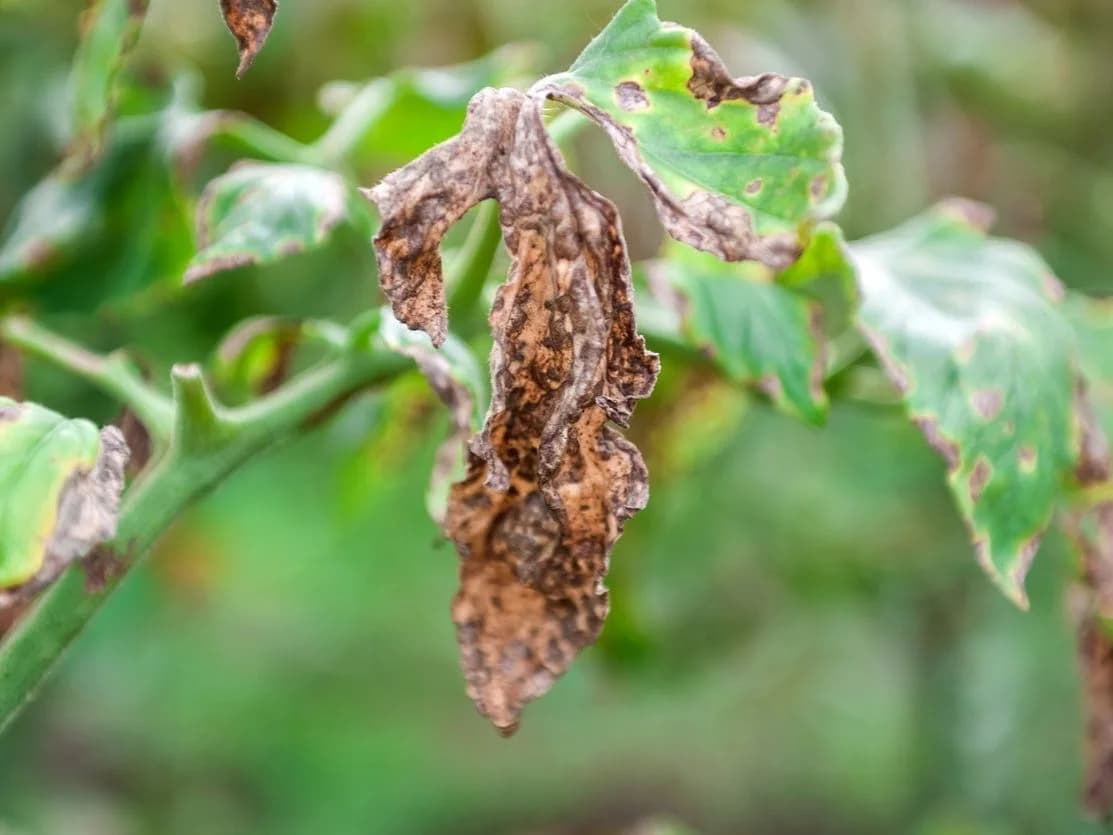
Farmer, when a plant starts wilting earlier than expected, do not ignore the warning sign.
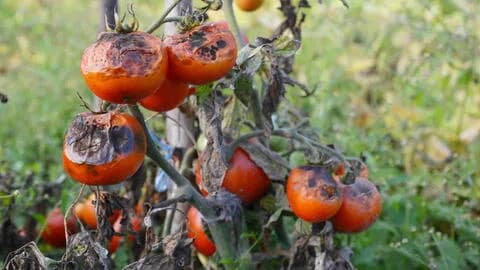
Early plant wilting is one of the challenges that can cause significant losses if it is not identified and addressed in time. A plant may gradually begin to wilt, its leaves may turn yellow, growth may become stunted, and eventually the plant may die.
At CHETU AGROSOLUTION, we advise farmers not to immediately assume, “The plant does not have enough water, so I should add more water,” or “The plant has a disease, so I should spray a pesticide.”
First, identify the cause of the wilting.
Wilting can be associated with different diseases as well as problems involving water, roots and soil conditions. For example, Fusarium wilt can cause plants to wilt during hot conditions and, in some cases, recover temporarily at night during the early stages. Leaves may later turn yellow and wilting can progress. Its symptoms can also resemble those of Verticillium wilt and other problems, which is why accurate diagnosis is important.
In this article, we guide you on how to identify early wilting, understand possible causes, prevent it and take appropriate action when you see it in your field.
1. WHAT IS EARLY WILTING?
Wilting is a condition in which a plant loses its firmness and its leaves or other plant parts begin to droop, curl or become limp.
The problem can occur for many different reasons.
Possible causes include:
Diseases affecting the roots
Fusarium wilt
Verticillium wilt
Some bacterial diseases
Root rot
Lack of water
Excessive water
Root damage
Root-feeding pests
Highly compacted soil
Excessive salts in the soil
Heat stress
Damage to the stem or roots
Therefore, wilting is not the name of one specific disease.
This is an important point that we want every farmer to understand.
2. WHY DOES A PLANT WILT?
Farmer, for a plant to remain healthy and upright, its roots need to absorb water and nutrients from the soil, while the plant's internal transport system must move that water to different parts of the plant.
When this system is disrupted, the plant may begin to wilt.
For example, Fusarium wilt affects the plant's internal water-conducting system. Symptoms may begin on lower leaves, followed by yellowing and increasingly severe wilting.
However, if the roots are damaged by rot, the plant may also fail to obtain enough water even when the soil contains sufficient moisture.
That is why we emphasize:
Do not look only at the leaves. Examine the entire plant.
3. EARLY SYMPTOMS OF WILTING IN THE FARM
Farmer, we advise you to start monitoring symptoms early.
Symptoms may include:
🌱 Drooping leaves
Leaves may begin losing their firmness and hang downward.
🌱 Lower leaves becoming affected
In some wilt diseases, symptoms begin on lower leaves and later spread through the plant.
🌱 Yellowing leaves
The plant may begin changing color as a result of problems affecting the roots or the transport of water and nutrients.
🌱 Stunted growth
The plant may remain small and fail to reach its expected growth.
🌱 Increased wilting during hot conditions
With some forms of Fusarium wilt, plants may wilt more severely during hot conditions and appear to recover at night during the early stages of the disease.
🌱 Eventually, the plant may die
If the cause is not identified and managed, wilting can progress until the plant dies.
4. FARMER, DO NOT CONFUSE WILTING WITH LACK OF WATER
This is an important mistake we want to prevent.
When a plant wilts, the first thought a farmer may have is:
“The plant does not have enough water.”
But not all wilting is caused by lack of water.
The soil may contain sufficient moisture while the plant still wilts because its roots are damaged or its internal water-conducting system has been affected.
On the other hand, insufficient water can also cause wilting.
Therefore, before adding more water, ask yourself:
How much moisture is in the soil?
What condition are the roots in?
How many plants are affected?
Where does the wilting begin?
5. ROOT ROT AND WILTING
Roots are the foundation of the plant.
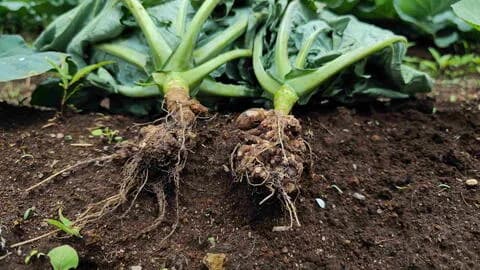
When roots rot, become damaged or are attacked by pathogens, the plant's ability to absorb water and nutrients can be reduced.
Symptoms associated with root problems may include:
Plant wilting
Stunted growth
Yellowing leaves
Discolored roots
Soft roots
Roots breaking easily
Plant death
That is why we advise farmers experiencing wilting to inspect the roots, not only the leaves.
6. FUSARIUM WILT — AN IMPORTANT CAUSE OF WILTING
Farmer, in some crops, particularly tomatoes, peppers and eggplants, Fusarium wilt is an important disease that can cause wilting.
The disease is caused by Fusarium oxysporum and can cause yellowing leaves and plant wilting. Under some conditions, symptoms may appear more strongly on one side of the plant.
When the lower stem is cut lengthwise near soil level, the internal water-conducting tissues may show brown discoloration. However, we advise farmers not to rely on this symptom alone for a final diagnosis because other diseases can produce similar symptoms.
7. OTHER DISEASES CAN ALSO CAUSE WILTING
Farmer, Fusarium is not the only cause of wilting.
Other diseases, such as Verticillium wilt, can cause yellowing leaves, wilting beginning from lower parts of the plant and eventual decline of the entire plant.
Some bacterial diseases can also cause wilting and discoloration inside the stem. For example, bacterial canker of tomato can cause leaf wilting and eventually weaken or kill affected plants.
This is why we emphasize:
Do not choose a pesticide simply because you see wilting.
8. TOO MUCH WATER CAN ALSO CREATE PROBLEMS
Farmer, do not assume that only plants lacking water can wilt.
Excessive water can damage the root environment.
When soil remains excessively wet for long periods:
Air spaces in the soil decrease
Roots can become weakened
Root function can be reduced
Conditions may become favorable for some root diseases
We advise you to manage irrigation according to:
Soil type
Crop requirements
Plant age
Weather conditions
Soil moisture
Irrigation system
Drainage conditions
9. DRAINAGE IS IMPORTANT
If your field holds water for long periods, do not ignore the problem.
We advise you to:
Establish appropriate drainage channels.
Remove standing water where possible.
Avoid excessive irrigation.
Consider the field's drainage capacity before planting.
Identify areas where water accumulates most.
Farmer, roots need water, but they also need sufficient air in the root zone.
10. COMPACTED SOIL CAN AFFECT ROOTS
Compacted soil can restrict root development.
It can also affect:
Water infiltration
Air movement
Root growth
Nutrient availability
We advise you to avoid unnecessary activities that compact the soil, particularly when the soil is excessively wet.
11. HEALTHY SEEDS AND SEEDLINGS ARE AN IMPORTANT FORM OF PROTECTION
Farmer, do not wait for a disease to appear in the field before thinking about seed quality.
We advise you to:
Buy seeds from trusted sources.
Select varieties suitable for your area.
Consider disease-resistance information where available.
Use healthy seedlings.
Avoid transplanting seedlings showing disease symptoms.
For some diseases such as Fusarium wilt, resistant varieties can help reduce risk, but resistance can depend on the specific pathogen race or strain. Therefore, it is important to select seed based on reliable information.
12. DO NOT SAVE SEED FROM AFFECTED PLANTS
Farmer, if your field has been affected by a disease that can be seed-borne, saving seed from affected plants may increase the risk of carrying the problem into another production season.
We advise you to use seed from reliable sources and follow appropriate quality standards.
13. FIELD SANITATION IS IMPORTANT
Some pathogens can survive in crop residues and soil.
Therefore, we advise you to:
Remove severely affected plants using an appropriate method.
Remove diseased crop residues.
Clean farm tools when necessary.
Avoid moving soil from diseased areas to clean areas.
Do not use contaminated equipment without cleaning it properly.
For Fusarium wilt, the pathogen can be spread through infected seedlings or equipment contaminated with infested soil.
14. DO NOT WORK IN THE FIELD WITHOUT A SANITATION PLAN
Farmer, if your field has a disease problem, consider how you move through the field and how you use farm equipment.
Infested soil can be moved through:
Footwear
Tools
Tires
Farm machinery
Seedlings
Crop residues
We advise you to clean equipment and avoid moving soil from affected areas to unaffected areas.
15. CROP ROTATION CAN HELP
If the problem is associated with a soil-borne pathogen, repeatedly growing the same crop can increase disease pressure.
We advise you to practice crop rotation based on:
The disease involved
Crop families
Field history
Soil type
Crops suitable for your area
For some Fusarium wilt situations, several years away from susceptible crops may reduce disease pressure, but the rotation plan should be based on the specific pathogen and crops involved.
16. WEEDS CAN ALSO BE INVOLVED
Farmer, do not ignore weeds.
Some pathogens can survive in weeds that act as alternative hosts.
Therefore:
Control weeds on time.
Do not allow the field to contain plants that may help maintain the disease cycle.
17. DO NOT APPLY FERTILIZER BY GUESSWORK
Farmer, plant nutrition is important, but excessive fertilizer is not the solution to every crop problem.
We advise you to:
Plan nutrition according to the crop.
Consider the crop growth stage.
Conduct soil testing where possible.
Avoid excessive nitrogen application.
Maintain balanced plant nutrition.
Under some Fusarium wilt conditions, excessive nitrogen can increase disease severity.
18. DO NOT IRRIGATE OUT OF HABIT
Farmer, do not say:
“Today is irrigation day, so I must irrigate.”
Check the field first.
If the soil already contains enough moisture, adding more water unnecessarily may create additional problems.
We advise you to base irrigation on:
Crop requirements
Soil type
Growth stage
Weather conditions
Soil moisture
19. HOW TO EXAMINE A PLANT THAT HAS STARTED WILTING
Farmer, when you find a wilting plant, do not immediately pull it out and throw it away without examining it.
Step 1: Examine the leaves
Check:
Lower leaves
Upper leaves
Yellowing
Spots
Curling
Severity of wilting
Step 2: Examine the stem
Inspect the lower part of the stem.
Look for:
Lesions
Discoloration
Softening
Cracks
Step 3: Examine the roots
Check:
Root color
Firmness
Rot
Smell
Fine roots
Dead roots
Step 4: Examine the inside of the stem
With some wilt diseases, cutting the stem lengthwise may reveal discoloration in the internal water-conducting tissues. For example, Fusarium wilt may produce brown discoloration in these tissues.
However, we emphasize: do not use a single symptom to make a final diagnosis.
20. WHEN ONLY A FEW PLANTS ARE AFFECTED
Farmer, if only a few plants have started wilting, do not say:
“It is only a few plants.”
Start investigating early.
Check whether the affected plants are located in:
Areas with excessive moisture
Areas with different soil conditions
Areas with a history of disease
Areas repeatedly planted with the same crop
Areas close to previously affected plants
This can provide important information about the source of the problem.
21. WHEN THE WHOLE FIELD IS AFFECTED
If almost the entire crop begins wilting, we advise you to also examine environmental factors:
Is there drought?
Has irrigation been reduced?
Is there extreme heat?
Are the roots damaged?
Is there excessive salt in the soil?
Is there a nutrient problem?
Is a disease spreading?
Do not choose a pesticide before investigating these possibilities.
22. DO NOT RUSH TO APPLY PESTICIDES
At CHETU AGROSOLUTION, we emphasize:
The right treatment starts with the right diagnosis.
Wilting caused by Fusarium, Verticillium, bacteria, root rot, lack of water or environmental problems should not automatically be managed in the same way.
For some Fusarium wilt situations, fungicides cannot cure plants that are already infected; prevention, resistant varieties and appropriate field management are therefore particularly important.
That is why we advise farmers not to simply go to an agro-input shop and say, “Give me a pesticide for wilting.”
First provide information about the problem and seek appropriate advice.
23. DO NOT MIX PESTICIDES BY GUESSWORK
Farmer, two or more products should not automatically be mixed simply because each one is described as a crop-protection product.
We advise you to:
Read the label.
Check the approved crop.
Check the target disease or pest.
Follow the recommended rate.
Do not mix products without knowing whether they are compatible.
Observe the required pre-harvest interval.
Use the appropriate personal protective equipment.
24. PREVENTION IS BETTER THAN WAITING FOR THE PLANT TO DIE
Farmer, managing wilting does not begin on the day the plant dies.
It begins before planting.
We advise you to:
Before planting
Select quality seed.
Choose an appropriate variety.
Check the field's disease history.
Conduct soil testing where possible.
Plan drainage and irrigation.
During planting
Use healthy seedlings.
Avoid damaging roots.
Avoid inappropriate plant density.
During crop growth
Carry out regular scouting.
Control weeds.
Manage irrigation properly.
Monitor plant nutrition.
Remove diseased plants using an appropriate management approach.
25. FARMER, SCOUT YOUR FIELD REGULARLY
Do not wait until many plants begin wilting.
Walk through the field regularly.
Look for:
Stunted plants
Yellow leaves
Plants wilting during hot conditions
Plants appearing to recover at night
Waterlogged areas
Root problems
Stem symptoms
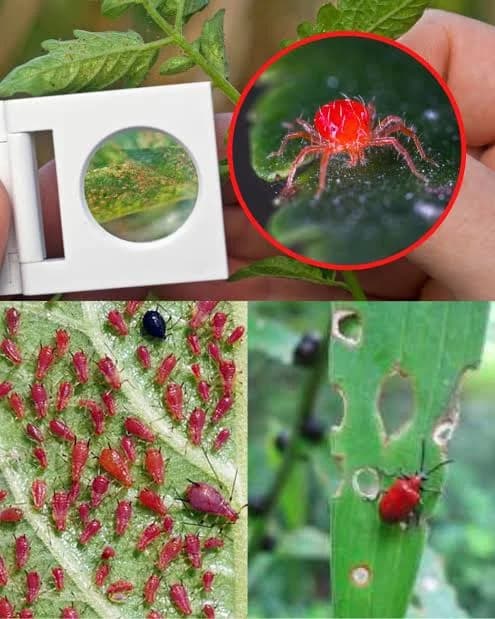
Insect pests
Other diseases
Early scouting can help you take action before the problem spreads or causes major losses.
26. FARMER, LEARN TO DISTINGUISH SYMPTOMS
We want farmers to become experts in their own fields.
When a plant turns yellow, do not immediately say:
“It is nitrogen deficiency.”
When a plant wilts, do not immediately say:
“It lacks water.”
When a plant develops spots, do not immediately say:
“It is a fungus.”
Instead:
Investigate.
Compare symptoms.
Check the roots.
Check the soil.
Check the field history.
Seek professional advice when necessary.
27. WHICH CROPS CAN EXPERIENCE WILTING?
Wilting can occur in different crops depending on the disease and environmental conditions.
It may occur in:
Tomatoes
Peppers
Eggplants
Potatoes
Watermelons
Cucumbers
Cabbage
Beans
Cotton
Maize
Other crops
However, the cause of wilting may differ from one crop to another.
That is why we advise you to identify the specific crop and diagnose the problem before selecting a product for management.
28. HOW DOES CHETU AGROSOLUTION HELP FARMERS?
At CHETU AGROSOLUTION, we believe farmers need more than simply buying pesticides.
Farmers need knowledge, appropriate agricultural inputs, quality seeds and advice that matches the actual conditions of their farms.
We support farmers in areas such as:
🌱 SEEDS
We help farmers select seeds suitable for their crop, location and season.
🌿 AGRICULTURAL INPUTS
We help farmers access appropriate inputs according to their production needs.
🧑🌾 AGRONOMIC ADVICE
We help farmers understand farm challenges and plan appropriate actions.
🔍 PROBLEM SOLVING
We help farmers assess challenges related to:
Diseases
Insect pests
Fertilizers
Roots
Soil
Water
Seeds
Plant growth
🚜 FARM MONITORING
We encourage farmers to obtain professional support when necessary to monitor crop conditions and plan appropriate management actions.
29. FARMER, SHARE INFORMATION ABOUT YOUR FARM WITH US
When seeking support from us, we advise you to provide information such as:
Crop you are growing
Seed variety
Crop age
Farm location
Soil type, if known
Irrigation system
Field history
Where the symptoms first appeared
When the wilting started
Products already used
Fertilizers already applied
Whether the problem affects one area or the entire field
If possible, photos of:
The whole plant
Leaves
Stem
Roots
Affected area of the field
can help us understand the problem more clearly.
30. DO NOT ALLOW EARLY WILTING TO TURN INTO A MAJOR LOSS
Farmer, one wilting plant may be an early warning that something is not right.
Do not wait:
5 plants → 20 → 50 → 100 → half of the field.
Start investigating early.
Remember:
Early wilting is a warning sign; it is not necessarily a disease diagnosis.
31. OUR ADVICE TO FARMERS
At CHETU AGROSOLUTION, we advise you:
Do not irrigate by guesswork.
Do not apply fertilizer by guesswork.
Do not apply pesticides by guesswork.
Do not choose seed by guesswork.
Do not ignore early symptoms.
Do not ignore root health.
Do not ignore field history.
Do not ignore field sanitation.
Instead:
Inspect → Identify → Plan → Use appropriate inputs → Monitor.
32. CHETU AGROSOLUTION — WE ARE WITH THE FARMER
Farmer, we understand that farm challenges can be discouraging, especially when you believe you are doing everything correctly but your crops begin to wilt.
Do not give up.
Contact us at CHETU AGROSOLUTION.
We can support you with:
🌱 Seeds
🌿 Agricultural inputs
🧑🌾 Agronomic advice
🔍 Support in understanding farm challenges
📋 Guidance on appropriate steps to take
Farmer, when you encounter wilting or any other crop challenge, do not rush to apply a pesticide without knowing the cause.
Seek advice.
Get appropriate inputs.
Plan your production.
And manage your farm with knowledge.
CHETU AGROSOLUTION
BETTER INPUTS, BETTER HARVESTS, BETTER LIVES.
Farmer, do not farm by guesswork.
FARM WITH A PLAN.
FARM WITH KNOWLEDGE.
FARM WITH THE RIGHT ADVICE.