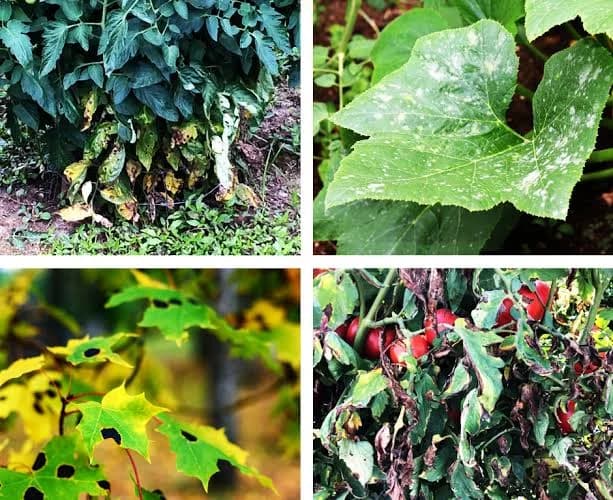
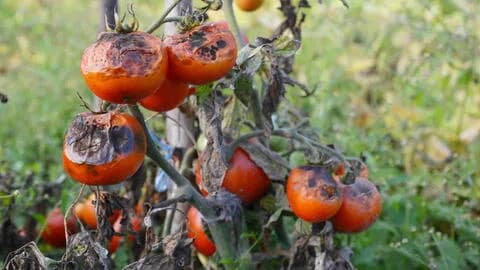
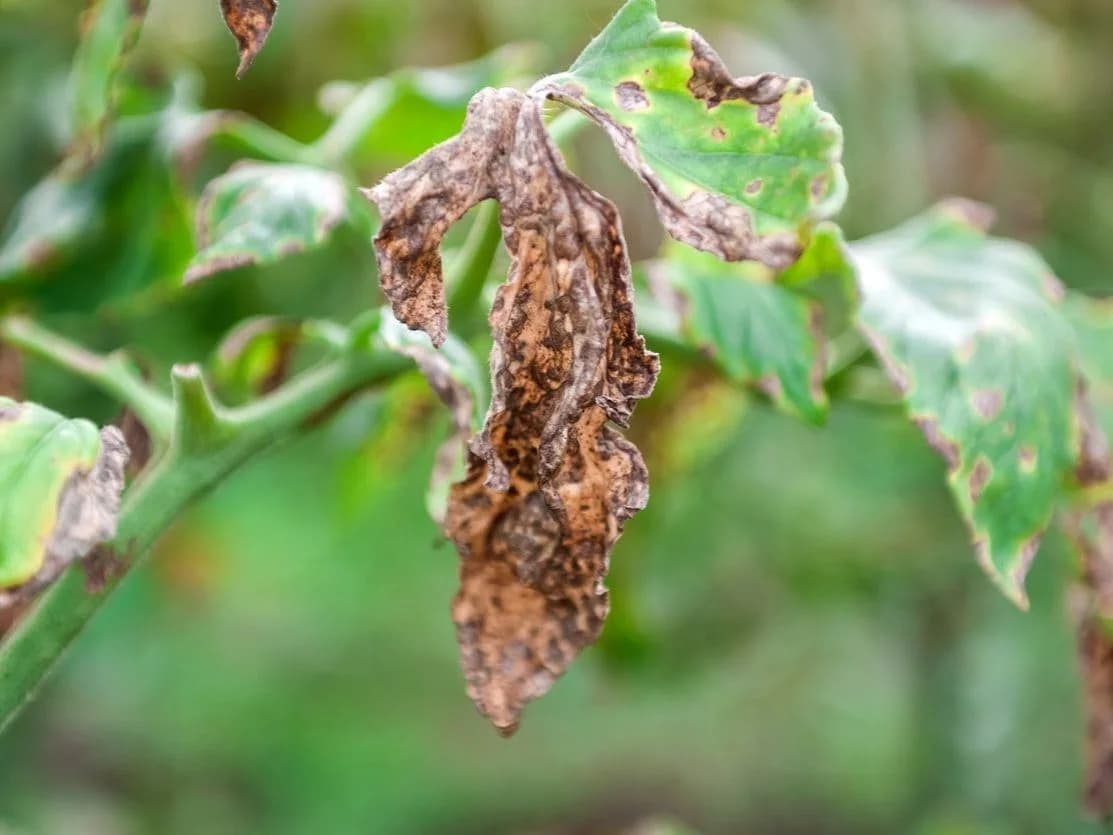
POWDERY MILDEW OR WHITE MOLD IN THE FARM
By CHETU AGROSOLUTION · 1 October 2026
HOW TO IDENTIFY, PREVENT AND MANAGE IT
Farmer, a healthy field begins with the ability to identify problems early.
In crop production, some diseases begin with small symptoms on a few leaves, but if ignored, they can reduce the plant's ability to produce food, weaken crop growth, and eventually reduce yields.
One of these diseases is Powdery Mildew, which is also commonly referred to as White Mold in some farming communities.
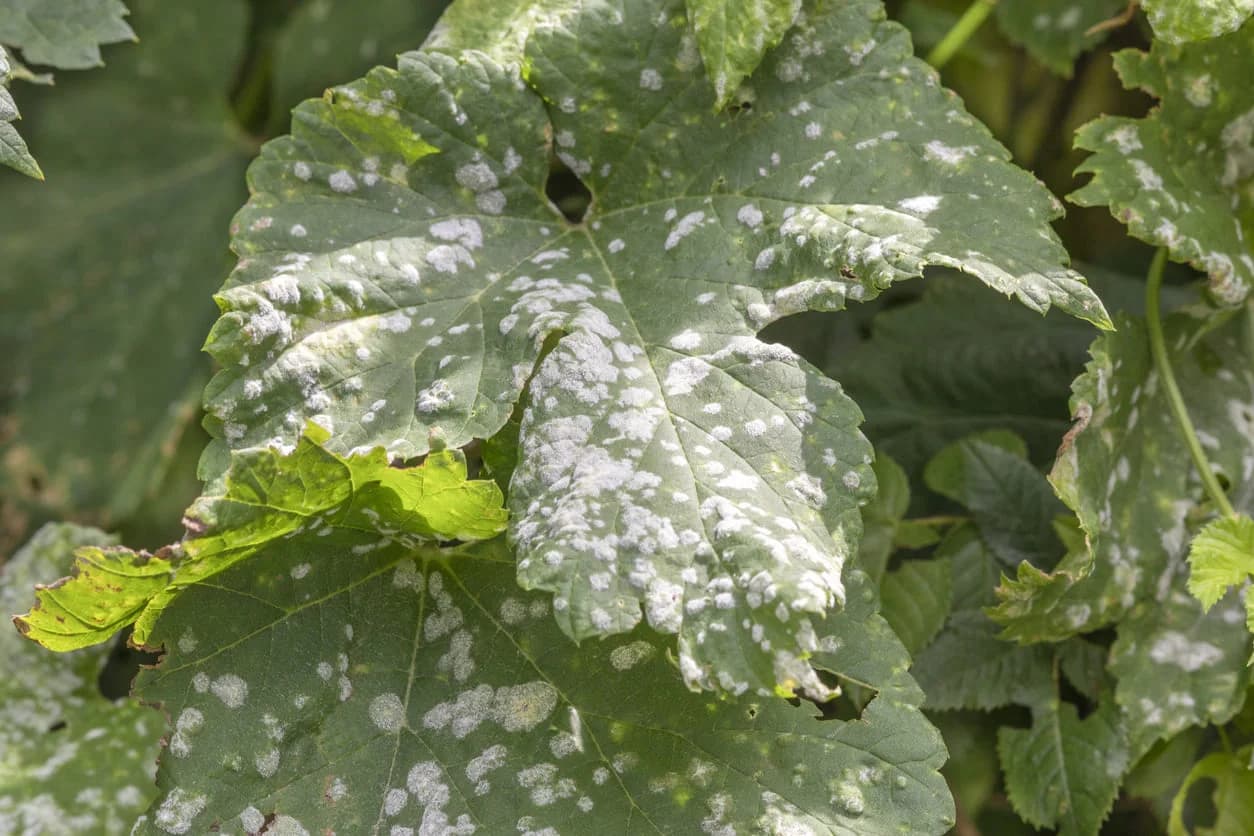
The disease appears as a white, powder-like coating on the upper or lower surfaces of leaves and may sometimes affect stems and other parts of the plant. Powdery mildew affects many crops, although the specific pathogen can differ depending on the crop.
At CHETU AGROSOLUTION, we advise you not to wait until powdery mildew spreads throughout the field. We want you to learn how to identify the symptoms early, understand the conditions that encourage the disease, and take appropriate action on time.
1. WHAT IS POWDERY MILDEW?
Powdery mildew is a plant disease caused by different groups of fungi.
An important point is that the same fungus does not cause powdery mildew on every crop. Powdery mildew affecting cucumbers may differ from powdery mildew affecting tomatoes, peas, beans, melons, or other crops.
This is why we advise farmers:
Do not use a pesticide simply because another farmer used it without confirming the crop, disease, and whether the product is registered for that specific use.
Symptoms may look similar, but management can vary depending on the crop and the pathogen involved.
2. WHY IS IT CALLED “POWDERY MILDEW”?
Farmer, the name comes from the appearance of the disease.
When you look at an affected leaf, you may see:
White spots.
A white powder-like coating.
White patches that look as if flour has been sprinkled on the leaf.
Powder-like growth on the upper or lower leaf surface.
In some crops, powdery growth may also appear on stems and leaf stalks.
This powdery appearance is largely caused by the growth of the pathogen and its spores on the plant surface.
3. EARLY SYMPTOMS OF POWDERY MILDEW
Farmer, detecting the disease early makes it easier to plan management than waiting until the plant is severely affected.
Early symptoms may include:
1. Small white spots
You may notice small areas of powdery growth on the leaves.
2. Increasing powdery growth
The spots may expand and merge, covering larger areas of the leaf.
3. Changes in leaf color
In some crops, affected leaves may begin turning yellow, particularly as the disease progresses.
4. Leaf curling or distortion
Severely affected leaves may become weak, curl, or develop an abnormal shape.
5. Leaf drying
As the disease becomes severe, affected areas may die, reducing the leaf's ability to photosynthesize.
6. Weak plant growth
When a plant loses healthy leaves, its ability to produce food decreases.
4. WHICH CROPS CAN BE AFFECTED BY POWDERY MILDEW?
Farmer, do not assume that powdery mildew affects only one crop.
It can occur on:
Tomatoes.
Cucumbers.
Watermelons.
Pumpkins.
Squash.
Melons.
Beans.
Peas.
Peppers.
Carrots.
Okra.
Cabbage and some other brassicas.
Other vegetable crops.
However, the specific powdery mildew pathogen can differ between crops, and a pathogen affecting one crop may not infect another crop in the same way.
5. POWDERY MILDEW CAN REDUCE YIELDS
Farmer, do not underestimate powdery mildew simply because it looks like powder on the leaves.
Leaves are the plant's food-producing factory.
When disease covers the leaves:
Photosynthesis can decrease.
Leaves may age and die prematurely.
Plant growth can become weaker.
Fruit numbers or fruit size may decrease.
The productive period of the crop may become shorter.
Crop quality can be affected.
In cucurbits such as cucumbers, pumpkins, and melons, powdery mildew can cause premature leaf death and affect fruit size, quality, and the duration of production.
Therefore:
Powdery mildew is not a problem that should be ignored.
6. WHAT CONDITIONS ENCOURAGE POWDERY MILDEW?
Here is something important we want every farmer to understand.
Many farmers assume that every fungal disease requires leaves to remain wet for long periods.
With powdery mildew, the situation can be different.
The disease can develop well under conditions such as:
Moderate temperatures.
High relative humidity.
Low light or excessive shade.
Crowded crops.
Poor air circulation.
Excessive vegetative growth.
Crop stress, depending on the crop and environmental conditions.
Powdery mildew can develop without prolonged free water on the leaf surface, unlike some other leaf diseases. Some powdery mildew pathogens prefer humid air while the leaf surface itself is not continuously wet.
7. FARMER, DO NOT CONFUSE POWDERY MILDEW WITH DOWNY MILDEW
This is very important.
Powdery mildew and downy mildew are not the same disease.
Powdery mildew commonly appears as a white powder-like coating on the upper or lower surface of leaves.
Downy mildew often begins with yellow or pale green leaf spots and may produce fungal-like growth on the underside of leaves under favorable conditions.
Therefore, when you see:
“The leaves have a mildew disease.”
Do not stop there.
We want you to ask:
Which mildew?
Correct identification is the foundation for choosing the right management approach.
8. DO NOT CONFUSE POWDERY MILDEW WITH SCLEROTINIA WHITE MOLD
Farmer, the name White Mold can also refer to another disease caused by Sclerotinia, which is different from powdery mildew.
Sclerotinia white mold often produces white, cotton-like fungal growth, causes rotting of affected plant tissues, and may later produce hard black structures called sclerotia.
This disease favors cool, moist conditions and can affect crops such as beans, cabbage, tomatoes, carrots, and others.
Therefore, farmer:
White powder on a leaf does not automatically mean Sclerotinia white mold.
And:
Sclerotinia white mold is not the same disease as powdery mildew.
This is why we strongly emphasize correct diagnosis before purchasing pesticides.
9. SCOUT YOUR FIELD REGULARLY
We advise you not to wait until the disease becomes visible from a distance.
Conduct regular field scouting.
Walk through the field and inspect:
Lower leaves.
Middle leaves.
Young leaves.
Upper leaf surfaces.
Undersides of leaves.
Stems.
Leaf stalks.
Shaded areas.
Areas where plants are crowded.
Areas with excessive vegetative growth.
For crops that are highly susceptible, regular inspection helps detect disease before it becomes widespread.
10. DO NOT FORGET TO CHECK THE UNDERSIDE OF LEAVES
Farmer, sometimes when you look at a plant quickly, the leaf may appear normal.
But turn the leaf over.
Check:
The upper surface.
Then:
The underside.
Powdery mildew can occur on either surface depending on the crop and pathogen involved.
11. OVERCROWDED PLANTS CAN INCREASE THE PROBLEM
Farmer, do not overcrowd plants simply because you want to fit more plants into a small area.
Overcrowded plants:
Reduce air circulation.
Increase shade within the crop canopy.
Make field scouting more difficult.
Create environmental conditions that can favor some diseases.
We advise you to follow the recommended spacing for your crop and variety.
Do not use cucumber spacing for tomatoes.
Do not use tomato spacing for watermelon.
Plan the field according to the crop.
12. CONTROL WEEDS
Weeds can make the crop canopy dense and increase competition for water, nutrients, and light.
We advise you to:
Weed on time.
Remove weeds that restrict air movement.
Avoid unnecessary crop density.
Monitor weeds that may serve as alternative hosts for some pathogens.
Good weed management is part of maintaining a healthy field environment and can help reduce conditions favorable to disease development.
13. DO NOT OVERAPPLY NITROGEN WITHOUT A PLAN
Farmer, we know nitrogen is essential for plant growth.
But:
More is not always better.
Excessive nitrogen can encourage excessive vegetative growth and produce a dense canopy, which may increase conditions favorable for powdery mildew in some crops.
Therefore, we advise you to:
Conduct soil testing where possible.
Apply fertilizer according to crop requirements.
Do not add nitrogen through guesswork.
Maintain balanced crop nutrition.
Follow an appropriate crop nutrition schedule.
14. QUALITY SEED IS PART OF DISEASE PREVENTION
Farmer, we advise you to start with suitable planting material.
When selecting seed:
Check quality.
Use a reliable source.
Select varieties suitable for your area.
Check whether varieties with powdery mildew resistance or tolerance are available.
Consider the season.
Consider your market.
Consider your production system.
Resistant or tolerant varieties can help reduce disease problems, although they do not mean that the crop can never become infected.
At CHETU AGROSOLUTION, we advise you to choose seed based on more than the variety name—consider the actual needs of your farm.
15. MANAGE WATER PROPERLY
Farmer, proper water management is important for crop health.
We advise you to:
Do not irrigate simply out of habit.
Check soil moisture.
Consider the crop's growth stage.
Avoid severe water stress.
Ensure good drainage.
Use an irrigation system suitable for your crop.
With powdery mildew, we need to distinguish high relative humidity from prolonged leaf wetness. Powdery mildew does not require free water on the leaf surface for infection in the same way as some other leaf diseases.
16. LIGHT AND AIR CIRCULATION ARE IMPORTANT
Farmer, when planning your field, consider:
Light + spacing + air movement + canopy management.
Areas with excessive shade and poor air circulation can create conditions favorable for powdery mildew.
Therefore:
Choose a site with suitable light.
Use appropriate plant spacing.
Control weeds.
Avoid excessive crop density.
Manage excessive canopy growth.
17. DO NOT WAIT UNTIL THE PLANT IS COVERED WITH POWDER
This is something we strongly emphasize.
A farmer may see a small amount of powdery growth and say:
“It is only one leaf.”
But that may be the beginning of a larger problem.
We advise:
When you see the first symptom → inspect other plants → identify the problem → plan your management action.
For some crops, experts recommend beginning fungicide management when the disease first appears rather than waiting until infection becomes severe.
18. DO NOT RUSH TO USE PESTICIDES WITHOUT DIAGNOSIS
Farmer, we want to change this habit:
“I see white powder, give me a pesticide.”
Instead, say:
“I see white powder. I want to know what disease it is and which crop is affected.”
White growth can be associated with different problems.
Before recommending a product, we need to know:
Crop.
Variety.
Crop age.
Symptoms.
Part of the plant affected.
Weather conditions.
Field history.
Products already used.
Number of applications.
Extent of infection.
19. POWDERY MILDEW CONTROL PRODUCTS SHOULD NOT BE CHOSEN BY GUESSWORK
Farmer, there are different products used to manage powdery mildew, but not every fungicide is suitable for every crop or every disease.
We advise you to:
Read the product label.
Confirm that your crop is listed.
Confirm that the target disease is listed.
Follow the recommended dosage.
Follow the application interval.
Observe the pre-harvest interval.
Wear appropriate protective equipment.
Do not mix products without proper advice.
Product labels must be followed, and fungicide use should consider the specific crop and disease being targeted.
20. DO NOT USE THE SAME PRODUCT REPEATEDLY WITHOUT A PLAN
Powdery mildew pathogens can develop resistance to certain fungicides.
This can cause a product that previously worked well to become less effective when it is repeatedly or incorrectly used without a resistance-management strategy.
Therefore, we advise you to:
Do not repeatedly use the same fungicide without a plan.
Consider FRAC groups where appropriate.
Do not increase the dosage simply because the disease has become severe.
Do not mix products without understanding compatibility and safety.
Follow the product label and professional advice.
We want long-term disease management, not a one-day solution.
21. FIELD SANITATION IS IMPORTANT
Farmer, after harvesting, do not leave the field unmanaged.
We advise you to:
Remove diseased crop residues appropriately.
Manage volunteer plants.
Control weeds.
Clean farm equipment where necessary.
Plan the next production season early.
Removing infected plant material can help reduce sources of infection for the next season, depending on the specific powdery mildew pathogen and production system.
22. DO NOT RELY ON ONE MANAGEMENT METHOD
Farmer, we emphasize Integrated Disease Management.
This means we do not rely on pesticides alone.
We combine:
QUALITY SEED
RESISTANT OR TOLERANT VARIETIES WHERE AVAILABLE
APPROPRIATE SPACING
ADEQUATE LIGHT AND AIRFLOW
WEED MANAGEMENT
BALANCED NUTRITION
PROPER WATER MANAGEMENT
REGULAR SCOUTING
FIELD SANITATION
APPROPRIATE FUNGICIDE USE WHEN NECESSARY
This is the foundation of modern crop disease management.
23. WATERMELON, CUCUMBER AND PUMPKIN FARMERS SHOULD BE PARTICULARLY CAREFUL
For crops in the cucurbit family such as:
Cucumber.
Watermelon.
Pumpkin.
Squash.
Melons.
powdery mildew can become a serious challenge and cause premature leaf death, potentially reducing fruit production and quality.
We advise:
Do not wait until many leaves become covered with white powder.
Start scouting early, especially as the crop enters its production stages.
24. TOMATO FARMERS SHOULD ALSO BE CAREFUL
In tomatoes, powdery mildew can appear differently depending on the pathogen involved.
In some forms of tomato powdery mildew, instead of seeing heavy white powder, the farmer may notice irregular yellow patches on the leaves, and severely affected leaves may eventually die.
Therefore:
Do not wait until you see a large amount of white powder before you begin investigating.
Also look for unusual changes in leaf color.
25. WHEN YOU SEE POWDERY MILDEW, DO THIS
Farmer, we advise you to follow these steps:
STEP 1
Stop and inspect.
Do not immediately spray an unknown product.
STEP 2
Identify the crop.
Is it tomato? Cucumber? Watermelon? Beans? Another crop?
STEP 3
Inspect the leaves.
Check both upper and lower surfaces.
STEP 4
Confirm whether it is actually powdery mildew.
Do not assume that every white spot is powdery mildew.
STEP 5
Inspect the entire field.
Determine whether only a few plants are affected or whether the disease is spreading.
STEP 6
Assess the field environment.
Spacing? Weeds? Shade? Air circulation? Nutrition?
STEP 7
Seek professional advice.
This is where we at CHETU AGROSOLUTION can help you.
26. HOW DOES CHETU AGROSOLUTION HELP YOU?
Farmer, we want you to understand that when we say:
“Contact us,”
we do not simply mean that we want to sell you a product.
We want to help you understand the challenge affecting your farm.
At CHETU AGROSOLUTION, we help farmers with:
Access to seeds.
Access to agricultural inputs.
Advice on seed selection.
Fertilizer-use advice.
Pest and disease management advice.
Crop problem-solving.
Farm management advice.
Production planning.
Farm monitoring where required.
We want the farmer to have:
The right inputs + the right knowledge + the right advice.
27. WHEN CONTACTING US, PROVIDE INFORMATION ABOUT YOUR FARM
Farmer, to help us advise you more effectively, we recommend that you tell us:
What crop are you growing?
Which seed or variety are you using?
How old is the crop?
When did the symptoms begin?
Did the symptoms begin on lower or upper leaves?
Is the powder on the upper or lower leaf surface?
Have the leaves started turning yellow?
Are leaves dying?
How many plants are affected?
How humid is the field?
Are you using irrigation?
Which fertilizers have you used?
Which pesticides have you used?
How many applications have you made?
Has the field experienced this problem before?
If you have photographs of affected plants, they may help with an initial assessment, although photographs alone cannot always confirm a disease diagnosis.
28. FARMER MISTAKES TO AVOID
We advise you to avoid:
❌ Ignoring small white spots.
❌ Waiting until many leaves are affected.
❌ Buying fungicides without identifying the disease.
❌ Using a pesticide intended for another crop without confirming its approved use.
❌ Increasing the dosage through guesswork.
❌ Mixing pesticides without proper advice.
❌ Repeatedly using the same fungicide without a resistance-management plan.
❌ Overcrowding plants.
❌ Allowing excessive weeds to grow.
❌ Applying excessive nitrogen without a nutrition plan.
❌ Using unreliable seed.
❌ Ignoring the field's disease history.
Farmer, do not farm only by habit.
29. OUR FARMING PLAN FOR YOU
We advise you to follow this plan:
BEFORE PLANTING
Select suitable seed.
Look for resistant or tolerant varieties where available.
Plan plant spacing.
Plan crop nutrition.
Plan irrigation.
Plan weed management.
Conduct soil testing where possible.
DURING PLANTING
Use healthy seed or seedlings.
Follow appropriate spacing.
Ensure adequate light and air movement.
Avoid unnecessary overcrowding.
DURING CROP GROWTH
Scout the field regularly.
Inspect leaves carefully.
Control weeds.
Manage nutrition.
Manage water.
Look for symptoms early.
WHEN DISEASE APPEARS
Identify the symptoms.
Assess the severity.
Seek advice.
Choose the appropriate management approach.
Use a suitable registered product where necessary.
Follow the product label.
AFTER HARVEST
Remove diseased residues appropriately.
Clean the field.
Control weeds.
Plan the next season.
Record the problems experienced during the season.
30. CHETU AGROSOLUTION: DO NOT COME TO US ONLY FOR “A PESTICIDE”
Farmer, we want to change the way we work together.
Do not simply say:
“Give me a pesticide for powdery mildew.”
Come and tell us:
“I am growing this crop, it is at this growth stage, I noticed these symptoms, they started at this time, and I have already used these products.”
That allows us to begin by considering the whole problem, rather than immediately focusing on a product.
Because sometimes the problem may actually be powdery mildew.
Sometimes it may be another disease.
And sometimes similar symptoms may be related to nutritional problems or environmental stress.
Correct diagnosis is the first step toward the right solution.
31. OUR FINAL ADVICE TO FARMERS
Farmer, when you see powdery growth on your leaves, do not panic and do not ignore it.
Inspect early.
Identify the problem.
Look at the field environment.
Manage weeds.
Use appropriate spacing.
Manage nutrition.
Manage water.
Choose suitable seed.
And when necessary, use the right product according to the label and professional advice.
We at CHETU AGROSOLUTION are here to support you through these steps.
We want to help you obtain:
QUALITY SEEDS.
THE RIGHT AGRICULTURAL INPUTS.
PROFESSIONAL FARMING ADVICE.
SOLUTIONS TO FARM CHALLENGES.
And above all:
KNOWLEDGE THAT HELPS YOU FARM WITH A PLAN.
32. CONTACT CHETU AGROSOLUTION
Farmer, if you are facing a powdery mildew/white mold challenge, do not wait until the disease spreads further.
Contact us for support with seeds, agricultural inputs, farming advice, and solutions to your crop-production challenges.
BETTER INPUTS.
BETTER HARVESTS.
BETTER LIVES.
Farmer, do not farm by guesswork.
FARM WITH A PLAN.
FARM WITH KNOWLEDGE.
FARM WITH THE RIGHT ADVICE.
CHETU AGROSOLUTION — WE FARM TOGETHER WITH YOU.