MITES IN THE FARM: HOW TO IDENTIFY, PREVENT AND MANAGE THEM
By CHETU AGROSOLUTION · 27 September 2026
FARMER, DO NOT IGNORE SMALL SYMPTOMS ON YOUR CROPS
Farmer, have you started noticing your crop leaves changing color, developing small spots, curling, drying, or the plant appearing weak without an obvious reason?
Your farm may be under attack by mites.
Mites are among the very small pests that can cause significant losses if they are not identified and managed early. Because they are extremely small, farmers may notice symptoms on the plant before they actually see the mites themselves.
At CHETU AGROSOLUTION, we do not want farmers to wait until their crops are severely damaged before looking for a solution.
We advise you:
Inspect early. Identify the problem. Take the right action. Keep monitoring.
And if you are not sure what the problem is, contact us at CHETU AGROSOLUTION so that we can help you understand the problem and guide you on appropriate steps.
1. WHAT ARE MITES?
Farmer, first it is important to understand what you are dealing with.
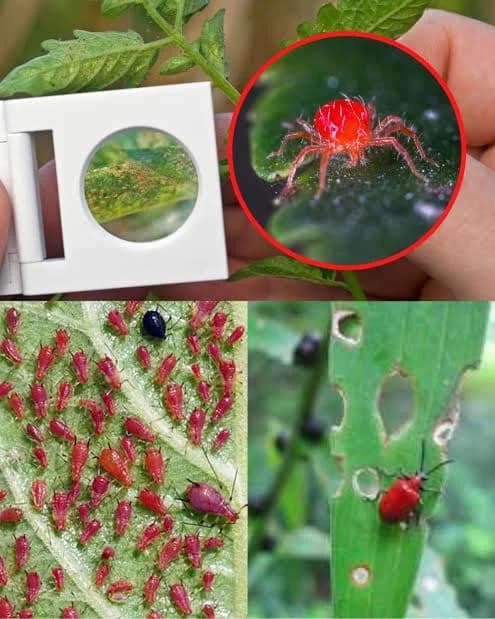
Mites are very small organisms related to arachnids, and some species attack plants by feeding on fluids from plant cells.
Because of their tiny size, they can sometimes be difficult to see with the naked eye without carefully examining the leaves or using a magnifying device.
Different mite species can attack different crops, and some species thrive particularly well under hot and dry conditions.
That is why we advise farmers not to look only for large insects.
Small pests can cause major problems in the field.
2. HOW DO MITES ATTACK PLANTS?
Mites mainly attack plants by feeding on fluids from plant cells.
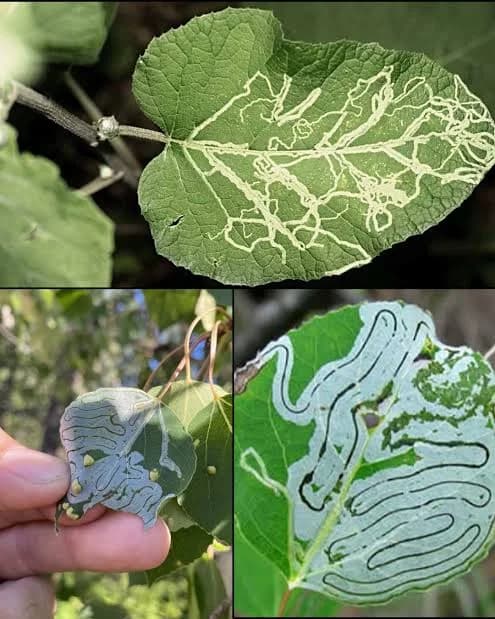
When their population becomes high, damage may appear on the leaves as:
Small spots.
Discoloration of leaves.
Yellow or bronze-colored leaves.
Leaf curling.
Leaf drying.
Stunted plant growth.
Loss of plant vigor.
In severe infestations, premature leaf drop.
Some types of mites can also produce fine webbing on parts of the plant, especially when populations become high.
3. COMMON SYMPTOMS OF MITE ATTACK
Farmer, do not wait until you see mites with your naked eye before you start investigating.
Learn to recognize the symptoms.
First symptom: Small spots on leaves
Leaves may begin developing small, faded spots.
These spots may make the leaf appear as though it has been damaged by many tiny feeding points.
Second symptom: Leaf discoloration
As the infestation increases, leaves may become:
Yellow.
Grayish.
Bronze-colored.
Or lose their normal green color.
Third symptom: Leaf curling
Some mite infestations can cause leaves to curl, fold or lose their healthy appearance.
Fourth symptom: Leaf drying
As the damage continues, parts of the leaf may begin to dry out.
Fifth symptom: Fine webbing
Some mite species produce fine webbing on leaves, young shoots or other parts of the plant.
If you see webbing together with leaves showing many small spots, inspect the plant very carefully.
4. WHY ARE MITES DANGEROUS?
Farmer, mites may be very small, but their effects can be significant.
Remember that leaves are important for producing food for the plant through photosynthesis.
When mites damage leaf tissues:
The plant's ability to photosynthesize may decrease.
The plant may become weak.
Growth may slow down.
Flowering may be affected.
Fruit development may be affected.
Crop quality may decline.
Severe infestations can cause significant leaf loss.
For a commercial farmer, this can mean higher production costs and unsatisfactory yields.
5. WHICH CROPS CAN BE ATTACKED BY MITES?
Mites can occur on different agricultural and horticultural crops.
Depending on the mite species and environmental conditions, they may be found on:
Tomatoes.
Peppers.
Cucumbers.
Watermelons.
Beans.
Flowers.
Other vegetable crops.
Various horticultural crops.
However, farmer, do not assume that every plant with yellow leaves has mites.
Symptoms can be similar to those caused by other problems.
6. DO NOT CONFUSE MITES WITH NUTRIENT DEFICIENCIES
This is very important.
A farmer may see yellow leaves and say:
“My crop has a fertilizer deficiency.”
But the actual cause may be mites.
Similarly, leaf discoloration may be caused by:
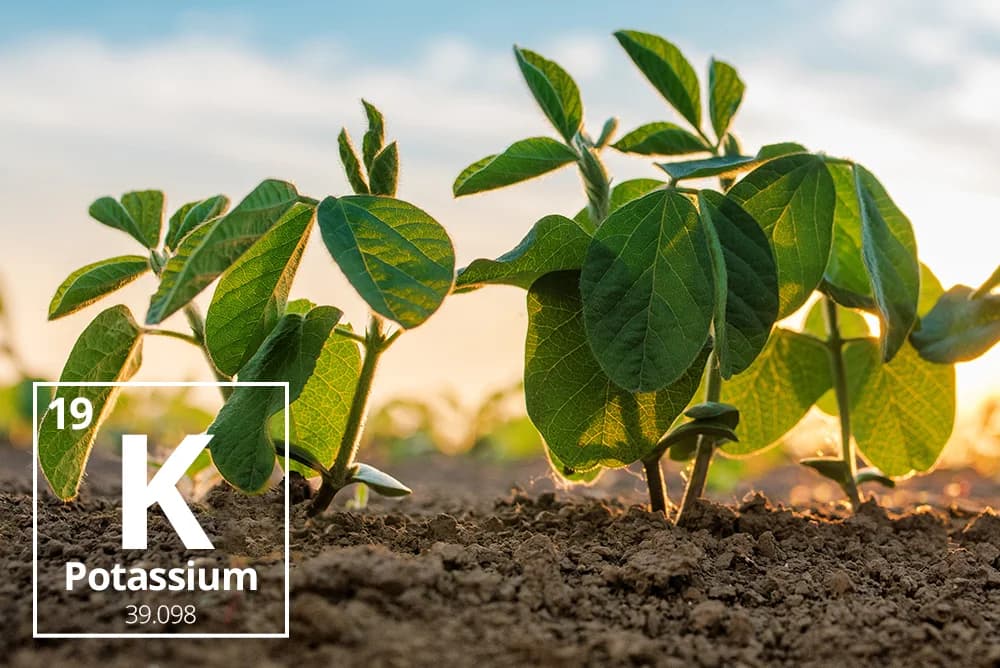
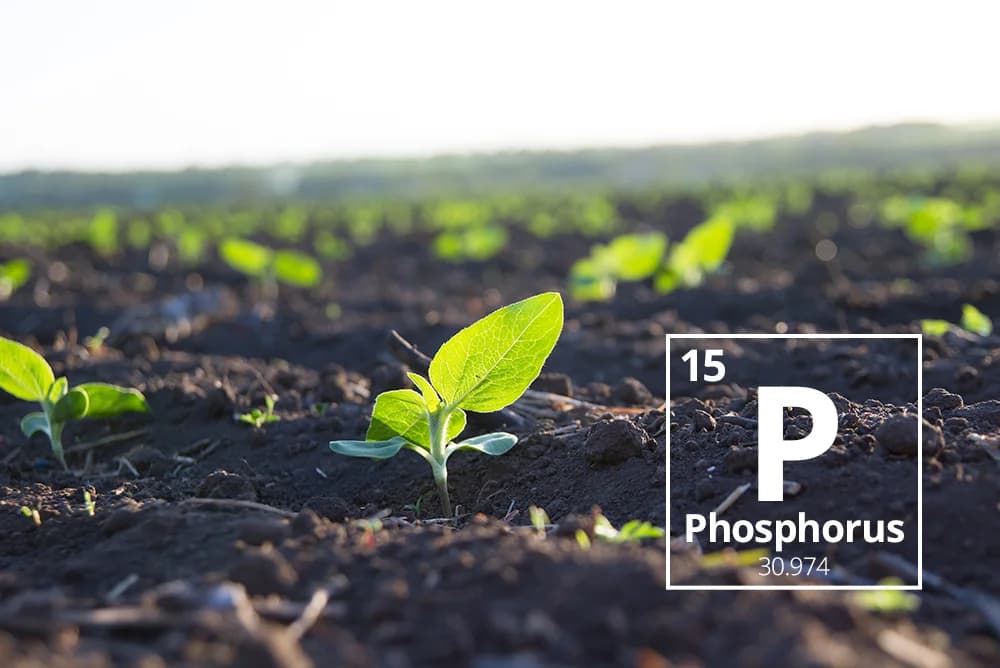
Nutrient deficiencies.
Diseases.
Other insect pests.
Insufficient water.
Excessive water.
Root damage.
High temperatures.
Other environmental stresses.
That is why we emphasize:
Do not rush to apply fertilizer or pesticides before investigating the cause of the problem.
7. FARMER, LEARN TO SCOUT YOUR FIELD
We advise you to establish a routine of regularly walking through your field.
Do not wait until plants look severely damaged.
During field scouting:
Check the lower leaves
Mites may be easier to detect when you carefully examine different parts of the plant.
Check the underside of the leaves
Farmer, do not inspect only the upper surface.
Turn the leaf over.
Carefully examine the underside.
Check young and mature leaves
Do not inspect only one part of the plant.
Look for webbing
If you notice fine webbing, carefully inspect for mites.
Compare plants
Compare a healthy plant with one showing symptoms.
8. A SIMPLE WAY TO CHECK FOR MITES
Because mites are extremely small, farmers can use simple methods to inspect them.
You can take a symptomatic leaf and examine it very closely.
If possible, use a hand lens to get a better view.
You can also place a white sheet of paper underneath the leaf and gently tap or shake the leaf, then check whether tiny moving organisms appear on the paper.
However, we emphasize:
Do not make a diagnosis based on only one symptom.
Consider the symptoms, the entire plant, field conditions and the history of the problem.
9. WEATHER CONDITIONS CAN ENCOURAGE MITE PROBLEMS
Farmer, environmental conditions play an important role in mite development.
Some mite species can increase more rapidly under:
Hot conditions.
Dry conditions.
Low humidity.
Therefore, during hot and dry periods, you may need to carry out more frequent scouting.
We advise you not to reduce monitoring simply because the field generally looks healthy.
When environmental conditions change, pest pressure can also change.
10. PROPER WATER MANAGEMENT IS IMPORTANT
Farmer, a plant experiencing water stress may be in a more difficult position to withstand additional challenges.
We advise you to:
Irrigate according to the needs of your crop.
Avoid allowing plants to experience severe water stress.
Also avoid excessive irrigation.
Maintain good root-zone conditions.
Provide proper drainage where necessary.
But remember:
Water is not a pesticide for mites.
Do not assume that simply adding more water will eliminate the problem.
Water management is part of maintaining plant health; it is not a replacement for correct pest identification and control.
11. DO NOT RUSH TO APPLY PESTICIDES
This is one of the most important things we emphasize at CHETU AGROSOLUTION.
When a farmer sees damaged leaves, the first reaction may be to rush and buy a pesticide.
But:
A pesticide that does not target the actual problem can waste money and delay the correct solution.
Before choosing a product, we advise you to confirm:
What type of mite or other problem is involved?
Which crop is affected?
What is the crop growth stage?
How severe is the infestation?
Which part of the plant is affected?
Is the product registered for that use?
Is it approved for the crop?
What is the correct application rate?
What is the required pre-harvest interval?
Always follow the product label.
12. MITES DO NOT NECESSARILY RESPOND TO ANY ORDINARY INSECTICIDE
Farmer, this is something you need to understand carefully.
Mites are not ordinary insects; biologically, they belong to the arachnid group.
Therefore, not every insecticide is an acaricide, and not every insect-control product will be effective against mites.
That is why we advise you not to choose a product based only on its name.
Consider:
Target pest + crop + registration + active ingredient + label instructions.
If you are not sure what to use, contact us first.
13. CHOOSE PRODUCTS ACCORDING TO THE PROBLEM
When we help you choose a product, we do not want to simply give you a product because you say:
“Give me a pesticide for mites.”
We first want to understand:
What crop are you growing?
When did the mites first appear?
Where are the symptoms appearing?
How severe is the infestation?
Which products have already been used?
How many times have they been used?
How old are the plants?
What are the conditions in the field?
This is a better way of moving toward a practical solution based on the actual situation.
14. DO NOT REPEATEDLY USE THE SAME PESTICIDE
Farmer, repeated use of products with the same mode of action can increase the risk of mites developing pesticide resistance.
Therefore, we advise that mite management should consider:
Correct identification.
Proper product application.
Monitoring the results.
Rotating appropriate modes of action where necessary.
Following the product label.
Avoiding indiscriminate pesticide use.
Do not think:
“This product worked the first time, so I will use it every week.”
That is not a good long-term management strategy.
15. DO NOT MEASURE PESTICIDES BY GUESSWORK
Farmer, do not say:
“I will just add a little pesticide.”
Or:
“I will add more so that it works faster.”
This can be a mistake.
We advise you to:
Follow the application rate stated on the label of the specific product.
Do not increase the dosage based on habit.
Do not reduce the dosage without a valid reason.
Do not mix different products unless you have confirmed that such mixing is permitted and compatible.
16. YOUR SAFETY IS IMPORTANT
Farmer, when working with pesticides, your safety must come first.
We advise you to:
Read the label.
Wear the appropriate protective equipment.
Avoid direct contact with pesticides.
Do not eat while mixing or spraying.
Do not drink alcohol during pesticide-handling activities.
Keep children away from pesticide mixing and spraying areas.
Wash your hands and equipment after use.
Store products safely.
Observe the required pre-harvest interval.
Good farming must go hand in hand with safety.
17. PROTECT NATURAL ENEMIES OF PESTS
Farmer, not every organism in your field is an enemy.
Some organisms can help naturally control pests.
Certain predatory insects and predatory mites can form part of the natural pest-control system.
Therefore:
Do not use pesticides indiscriminately without considering other beneficial organisms present in the field.
We recommend integrated pest management, combining:
Field scouting.
Field sanitation.
Environmental management.
Biological control where appropriate.
Good agricultural practices.
Pesticides when necessary.
18. WEEDS SHOULD NOT BE LEFT UNMANAGED
Farmer, a field with excessive weeds can make pest monitoring difficult.
Some weeds may also serve as hosts for certain pests.
We advise you to:
Manage weeds.
Keep important areas of the field clean.
Prevent weeds from competing with the crop.
Inspect plants around the field.
But also remember:
Do not remove every plant without understanding its role in the farm ecosystem.
19. HEALTHY SEEDS AND SEEDLINGS ARE THE FOUNDATION
Farmer, prevention begins before planting.
We advise you to:
Buy seeds from a reliable source.
Use quality seed.
Inspect seedlings before transplanting.
Do not transfer seedlings showing signs of pests into the field.
Manage the nursery properly.
Continue monitoring after transplanting.
At CHETU AGROSOLUTION, we can help you choose seeds and agricultural inputs according to your crop and production conditions.
20. PROPER CROP NUTRITION IS PART OF FIELD HEALTH
Farmer, we want to emphasize one thing:
Fertilizer is not a pesticide for mites.
Do not rush to increase fertilizer application if you do not understand the problem.
At the same time, do not ignore crop nutrition.
We advise you to plan crop nutrition according to:
Crop type.
Growth stage.
Soil condition.
Irrigation system.
Field history.
Production target.
Healthy soil and balanced nutrition are important parts of the overall production system.
21. MITES AND THE COST BURDEN ON FARMERS
Farmer, a mite problem is not only about damaged leaves.
If you identify the problem too late, you may face additional costs such as:
Purchasing control products.
Additional labor.
Repeated applications due to poor control.
Loss of part of the crop.
Reduced crop quality.
Lost time.
That is why we say:
Early detection can be part of reducing production costs.
22. DO NOT WAIT UNTIL MITES BECOME MANY BEFORE MONITORING
Farmer, good pest management does not begin when the crop is already severely damaged.
It begins with:
Scouting → Identification → Assessment → Correct action → Monitoring.
When you follow this process regularly, you have a better chance of detecting changes early.
23. WHAT SHOULD YOU DO WHEN YOU SEE MITES?
We advise you to follow these steps:
STEP 1: INSPECT
Look carefully at the leaves.
STEP 2: CONFIRM
Make sure the symptoms are consistent with mite damage and not another problem.
STEP 3: SCOUT THE FIELD
Check other plants and the entire field.
STEP 4: ASSESS THE LEVEL OF THE PROBLEM
Do not decide what to do before understanding the severity of the infestation.
STEP 5: CHECK THE HISTORY
Have pesticides already been used?
How is irrigation?
Has there been excessive heat?
Are the plants receiving adequate nutrition?
STEP 6: TAKE THE RIGHT ACTION
Use a management approach that matches the confirmed problem.
STEP 7: MONITOR
After taking control measures, do not stop monitoring the field.
Return and check whether the problem is decreasing or continuing.
24. FARMER, DO NOT ONLY ASK, “WHICH PESTICIDE IS FOR MITES?”
That question may be useful, but we want to guide you further.
We want you to understand:
Why have the mites appeared?
How severe is the infestation?
Which type of mite is involved?
Which crop is affected?
What is the crop growth stage?
Which product is registered for that use?
What is the correct method of application?
This is where we can begin discussing a solution based on actual information.
25. HOW CAN CHETU AGROSOLUTION HELP YOU?
At CHETU AGROSOLUTION, we believe farmers need more than products.
Farmers need the knowledge to use those products correctly.
That is why we support farmers in different areas of agriculture.
SEEDS
We advise you on seed selection according to the crop, location and season.
FERTILIZERS
We help you understand crop nutrition requirements and plan fertilizer use.
CROP PROTECTION PRODUCTS
We help you understand pest and disease challenges and choose products that match the confirmed problem, while following product-label instructions.
AGRONOMIC ADVICE
If you have a field challenge, we want you to contact us before the problem becomes severe.
SOLVING FARM CHALLENGES
If you do not understand why your crop is changing, becoming stunted or being damaged, provide us with information.
We can begin by assessing:
Crop type.
Location.
Plant age.
Symptoms.
Field history.
Fertilizers already used.
Pesticides already used.
Irrigation system.
Photos of the crop or field where possible.
26. FARMER, HELP US HELP YOU
When contacting us, do not simply say:
“I have mites, give me a pesticide.”
Give us more information.
For example:
“I am growing tomatoes. The plants are at a certain growth stage. The problem started on a certain date. The leaves have small spots and are changing color. The problem is concentrated in a certain part of the field. The weather has been hot and dry. I have already used a certain product.”
This information can help us understand the problem better and provide advice that addresses the actual situation.
27. DO NOT FARM BY GUESSWORK
Farmer, farming is not about guessing.
We want you to build a production system that includes:
Quality seed + healthy soil + proper nutrition + proper water management + scouting + pest management + weed management + market planning + record keeping.
Mites are only one of the many challenges that may occur in the field.
We want you to become a farmer who detects problems early and makes decisions based on knowledge.
28. COMMON FARMER MISTAKES WHEN DEALING WITH MITES
We want you to avoid these mistakes:
Mistake 1: Waiting too long
The farmer sees symptoms but waits until the crop is severely damaged.
Mistake 2: Buying pesticides without proper identification
The farmer goes to a shop and simply says:
“Give me a pesticide for the leaves.”
Mistake 3: Using another farmer's pesticide
A product that helped one farmer may not necessarily be the correct solution for your problem.
Mistake 4: Increasing the dosage
Increasing the dosage does not necessarily mean that the pesticide will work better.
Mistake 5: Repeatedly using the same product without a plan
This can increase the risk of pest resistance.
Mistake 6: Ignoring environmental conditions
Heat, dryness, water management, weeds and plant health can influence the development of the problem.
Mistake 7: Failing to monitor
After applying a control measure, the farmer stops monitoring the field.
29. OUR FINAL ADVICE TO FARMERS
Farmer, we want you to remember:
Mites are small, but do not underestimate them.
Leaf symptoms require careful investigation.
Do not use pesticides without knowing the problem.
Fertilizer is not a pesticide for mites.
Water is not a pesticide for mites.
Field sanitation is part of pest management.
Regular scouting is important.
Follow the product label.
Protect your health when using pesticides.
And do not wait until the problem becomes severe before seeking professional advice.
30. CHETU AGROSOLUTION WELCOMES YOU, FARMER
At CHETU AGROSOLUTION, we are with you throughout your farming journey.
We want to help you access:
The right agricultural inputs.
Quality seeds.
The right advice.
Identification of farm challenges.
Solutions that target the actual problem.
And a better production plan.
If you are facing a mite problem in your field, do not remain silent.
Do not wait until all the leaves are damaged.
Do not buy pesticides by guesswork.
Contact CHETU AGROSOLUTION.
We can help you access agricultural inputs, seeds and agronomic advice, as well as understand the challenges affecting your crop.
CHETU AGROSOLUTION
BETTER INPUTS, BETTER HARVESTS, BETTER LIVES.
Farmer, do not farm by guesswork. FARM WITH A PLAN. FARM WITH KNOWLEDGE. FARM WITH THE RIGHT ADVICE.