LEAF MINER IN THE FARM: HOW TO IDENTIFY, PREVENT AND MANAGE IT
By CHETU AGROSOLUTION · 26 September 2026
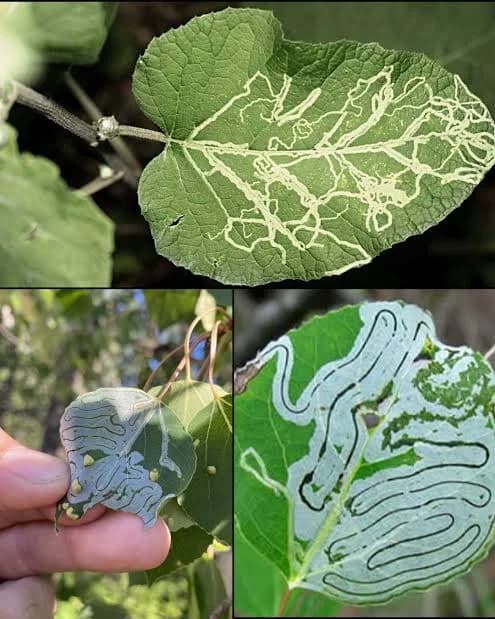
Farmer, have you started noticing white lines or winding patterns inside the leaves of your crops? Do the leaves look as if someone has drawn a map on them? Do not ignore these symptoms. Your farm may be affected by an insect commonly known as a LEAF MINER.
At CHETU AGROSOLUTION, we want farmers to avoid waiting until a problem becomes severe before looking for a solution. We advise you to learn how to identify the symptoms early, investigate the source of the problem, and take the right action at the right time.
Leaf miners are among the insect pests that can affect a variety of vegetable and fruit crops. Their larvae feed inside the leaf tissue, leaving winding lines or patterns that look like a map. Severe infestations can reduce the amount of healthy leaf tissue available for photosynthesis and may therefore affect crop growth and production.
1. WHAT IS A LEAF MINER?
Farmer, it is important to first understand the pest you are dealing with.
Leaf miners are insects whose larvae can cause significant damage by entering the leaf and feeding on the internal tissue between the leaf layers.
That is why, when you look at an affected leaf, you may see:
White or faded lines.
Winding patterns that look like a map.
Tunnels running through the leaf.
Large damaged areas when infestation becomes severe.
Weakening leaves that may sometimes fall prematurely.
Therefore, farmer, do not simply see unusual “drawings” on the leaves and assume that it is an ordinary disease. Inspect the plant carefully first.
2. HOW DO LEAF MINERS ATTACK CROPS?
Leaf miners can affect plants in a way that is sometimes difficult to notice at the beginning.
Adult insects lay eggs, and when the larvae emerge, they enter the leaves and begin feeding on the internal leaf tissue.
As the larvae continue feeding, the winding lines become more visible.
This is why we advise farmers:
Do not wait until the entire leaf changes color before you start investigating.
If you notice only a few leaves developing unusual patterns, take time to inspect them carefully.
3. MAIN SYMPTOMS OF LEAF MINER ATTACK
Farmer, these are some of the symptoms we advise you to look for during field scouting:
First symptom: Map-like lines
This is one of the most recognizable symptoms.
You may see white or faded lines winding through the leaf.
The lines may start from one point and continue toward another part of the leaf.
Second symptom: Tunnels inside the leaf
When you look closely, you may notice that the damage is occurring inside the leaf tissue, rather than simply on the leaf surface.
Third symptom: Large damaged areas
As the infestation increases, several tunnels may join together and create larger damaged sections.
Fourth symptom: Weakening leaves
When a leaf is heavily affected, its ability to function normally may decrease.
Fifth symptom: Premature leaf drop
Severe infestations can cause badly affected leaves to fall prematurely. This can reduce the plant's ability to produce food and may affect crop production.
4. WHY ARE LEAF MINERS A PROBLEM FOR FARMERS?
Farmer, leaves are not just decorations on a plant.
Leaves are very important because they help the plant produce food through photosynthesis.
Therefore, when leaves are heavily damaged:
The plant's ability to photosynthesize may decrease.
The plant may become weaker.
Growth may slow down.
Production may be affected.
In fruit crops, fruit size and quality may be affected if the plant loses a large portion of its healthy leaves.
Therefore, when we say “inspect for leaf miners early,” we are not trying to frighten farmers. We mean that if the problem is allowed to develop, leaf damage can become more severe.
5. WHICH CROPS CAN BE ATTACKED?
Leaf miners can occur on different crops.
Crops that may be affected include:
Tomatoes
Onions
Cucumbers
Watermelons
Other vegetable crops
Some other horticultural crops.
However, farmer, do not apply pesticides simply because you see lines on the leaves. First confirm the cause of the symptoms.
6. LEAF MINERS ARE NOT THE SAME AS EVERY INSECT THAT DAMAGES LEAVES
This is where we want to remind farmers of an important point:
Do not confuse leaf miners with other pests.
Other insects can also damage leaves, but the way they attack plants may be different.
For example, some insects feed on the surface of leaves, others suck plant sap, while others feed inside plant tissues.
Therefore, before choosing an insecticide, we advise you to:
Inspect the entire plant.
Check both the upper and lower surfaces of the leaves.
Check young and mature leaves.
Look for larvae.
Look for eggs or adult insects.
Assess the level of infestation.
Identify the crop and its growth stage.
Correct identification is the foundation of correct action.
7. INSPECT YOUR FARM REGULARLY
Farmer, do not go to the farm only on harvest day.
We advise you to establish a regular scouting routine.
During field scouting:
Walk through the crop rows.
Inspect plants from different areas of the field.
Examine young and mature leaves.
Look for new symptoms.
Compare healthy plants with affected plants.
Monitor whether the problem is increasing or decreasing.
Early detection gives you an opportunity to take action before the problem spreads widely.
8. DO NOT IGNORE A SINGLE AFFECTED PLANT
Many farmers see one affected plant and say:
“It is only one plant; I will check later.”
This can be a mistake.
One affected plant may be an early sign that a problem is beginning in the field.
We advise you to inspect the area surrounding that plant.
Ask yourself:
Are other plants showing similar symptoms?
Is the problem increasing?
Is it concentrated on one side of the field?
Is it more common on young plants?
Did it appear after seedlings were brought in from another location?
9. FIELD SANITATION IS PART OF PREVENTION
Farmer, field sanitation is part of pest management.
After harvesting, do not leave heavily affected crop residues in the field without a management plan.
We advise you to:
Remove affected plant residues where appropriate.
Manage plants that may serve as pest hosts.
Keep the field clean.
Avoid moving infested seedlings from one area to another.
Do not use heavily infested seedlings without proper inspection.
10. LEAF MINERS AND WEEDS
Farmer, do not focus only on the crop.
Some pests may use other plants as hosts.
Therefore, we advise you to manage weeds and unwanted plants within and around the field using appropriate practices.
However, this does not mean that every plant around the field is an enemy. Some plants may be part of the farm ecosystem.
That is why we emphasize:
Do not destroy everything without understanding it. Identify the problem first.
11. USE QUALITY SEEDS AND HEALTHY SEEDLINGS
Farmer, prevention begins before you enter the field.
When purchasing seeds or seedlings:
Choose a reliable source.
Avoid seedlings showing signs of pests or diseases.
Make sure the nursery is properly managed.
Do not transfer a pest problem from the nursery to the field.
When we help you select seeds, we consider the crop, location, season and production system you are targeting.
12. DO NOT RUSH TO USE PESTICIDES EVERY TIME YOU SEE SYMPTOMS
This is something we strongly emphasize at CHETU AGROSOLUTION.
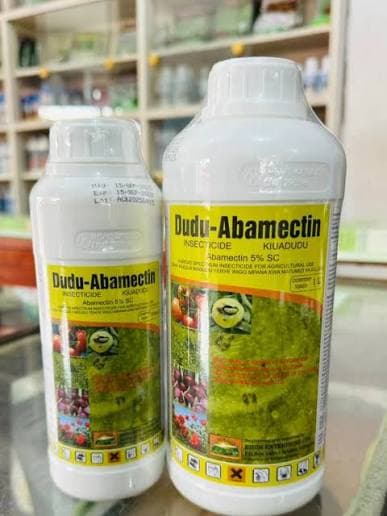
Seeing leaf miner symptoms does not automatically mean that any insecticide will be the solution.
Before using a pesticide, we advise you to confirm:
Which pest is involved?
Which crop is affected?
What is the crop growth stage?
How severe is the infestation?
Is the product registered for the intended use?
Is it approved for use on that crop?
What is the correct application rate and pre-harvest interval?
Always read the product label and follow the recommended instructions.
13. ROTATING ACTIVE INGREDIENTS IS IMPORTANT
Farmer, do not buy one pesticide and use it repeatedly for every generation of pests.
Repeated or incorrect use of the same active ingredient can increase the risk of pesticide resistance.
We advise that your pest-management program should consider:
Correct pest identification.
Infestation level.
Active ingredient.
Mode-of-action group.
Rotation between appropriate groups where necessary.
Following the product label.
Professional advice.
14. DO NOT SPRAY PESTICIDES BASED ON SOMEONE ELSE'S MEASUREMENT
Farmer, you may hear someone say:
“I used a certain amount in a 20-liter knapsack.”
Do not automatically copy that recommendation on your farm.
Different products contain different active ingredients and have different application instructions.
We advise you to use the label of the specific product and seek professional advice based on the crop, pest, crop growth stage and field conditions.
15. LEAF MINERS AND FARMER SAFETY
When we talk about pesticides, we also talk about health and safety.
Farmer, when pesticide application is necessary:
Read the product label.
Wear the recommended protective equipment.
Do not eat, drink or smoke while mixing or spraying.
Keep children away from pesticide mixing and application areas.
Never store pesticides in beverage bottles.
Observe the required pre-harvest interval.
Store products safely according to the label instructions.
Farmer safety is part of good farming.
16. LEAF MINERS AND IRRIGATION
Farmer, do not assume that every leaf problem can be solved with pesticides.
Plants with healthy roots, balanced nutrition and proper water management are generally better positioned to continue growing when they face pest and environmental challenges.
Therefore, we advise you to manage:
Water at the appropriate time.
Drainage where necessary.
Crop nutrition.
Root health.
Weeds.
Plant density.
Field sanitation.
17. GOOD CROP NUTRITION IS PART OF FIELD MANAGEMENT
Farmer, do not apply fertilizer randomly thinking that it will eliminate leaf miners.
Fertilizer is not an insecticide.
However, we need to ensure that the crop receives appropriate nutrition according to its needs.
We advise you to assess the soil where possible and plan crop nutrition according to:
Crop type.
Growth stage.
Soil condition.
Irrigation system.
Production target.
Field history.
18. DO NOT WAIT UNTIL THE FIELD IS SEVERELY DAMAGED BEFORE SEEKING HELP
Farmer, this is something we want to emphasize:
Do not hesitate to ask for advice early.
If you notice:
Leaves developing unusual patterns.
Leaves beginning to lose their normal color.
Pest damage increasing.
You are unsure whether the problem is a leaf miner or another pest.
You do not know which pesticide is appropriate.
You are unsure whether the problem is caused by an insect, disease or nutrient deficiency.
Contact us.
19. HOW CAN CHETU AGROSOLUTION HELP YOU?
At CHETU AGROSOLUTION, we want farmers to receive more than just agricultural products. We want farmers to have the knowledge needed to use those inputs correctly.
We can assist with areas such as:
Seeds
We advise you on seed selection according to the crop, location and season.
Fertilizers
We help you understand crop nutrition needs and how to plan fertilizer use.
Crop protection products
We help with identifying pest and disease challenges and selecting an appropriate solution based on the confirmed problem.
Agronomic advice
If you have a field problem, do not rush to buy a product before understanding the problem.
We advise you to contact us for guidance.
Solving farm challenges
If your plants are showing symptoms that you do not understand, provide us with information such as:
Crop type.
Location.
Plant age.
Symptoms.
Part of the plant affected.
Fertilizer application history.
Pesticide application history.
Irrigation system.
Clear photos of the plant or field where possible.
This information helps us provide better initial guidance.
20. FARMER, DO NOT JUST ASK, “WHICH PESTICIDE SHOULD I USE?”
We want to help you beyond that.
When you contact us, try to explain the entire problem.
Instead of saying:
“My tomatoes have leaf miners; give me a pesticide.”
Tell us:
“I am growing tomatoes, they are at a certain growth stage, the symptoms started on a certain date, they are appearing on young/old leaves, the infestation is concentrated in a particular part of the field, and I have already used a certain product.”
If you send clear photos, this can also help during the initial assessment.
21. DO NOT FARM BY GUESSWORK
Farmer, modern farming requires:
Quality seed + healthy soil + proper nutrition + proper water management + regular scouting + pest and disease management + market planning + record keeping.
Leaf miners are only one of the challenges you may encounter.
We want you to build a system that focuses on preventing and managing problems rather than waiting for them to become severe.
22. STEPS WE ADVISE YOU TO TAKE WHEN YOU SEE LEAF MINER SYMPTOMS
If you notice leaf miner symptoms, we advise you to:
Step 1: Stop and inspect the problem.
Step 2: Examine the leaves carefully.
Step 3: Confirm whether the problem is actually a leaf miner or something else.
Step 4: Assess the level of infestation in different parts of the field.
Step 5: Remove or manage affected plant parts where appropriate.
Step 6: Improve field sanitation and management.
Step 7: Assess whether other factors are weakening the plants.
Step 8: If an insecticide is necessary, choose a registered product appropriate for the crop and target pest.
Step 9: Follow the product label and safety instructions.
Step 10: Continue scouting after taking control measures.
23. OUR ADVICE TO FARMERS
Farmer, we want you to remember these points:
Leaf miners are not a problem to be ignored.
Leaf symptoms require investigation before deciding which pesticide to use.
Pesticides are not a substitute for field sanitation and regular scouting.
Do not use an insecticide without knowing what you are trying to control.
Do not repeatedly use the same active ingredient without a proper resistance-management plan.
Do not copy pesticide rates from another farmer without checking the label of the specific product.
And above all, do not wait until your field is severely damaged before seeking professional advice.
24. CHETU AGROSOLUTION WANTS TO WORK WITH YOU
At CHETU AGROSOLUTION, we believe that farmers need more than products.
You need:
The right agricultural inputs.
The right seeds.
The right advice.
Correct identification of farm problems.
And the right production plan.
That is why we welcome you to contact us whenever you experience a leaf miner problem or any other farming challenge.
We can assist you in accessing seeds, fertilizers, crop protection products and other agricultural inputs, together with professional advice on how to manage production challenges.
FARMER, WHEN YOU SEE LEAF MINERS IN YOUR FIELD — DO NOT PANIC. INSPECT, IDENTIFY AND TAKE THE RIGHT ACTION.
If you see symptoms that you do not know how to identify, contact CHETU AGROSOLUTION.
CHETU AGROSOLUTION — BETTER INPUTS, BETTER HARVESTS, BETTER LIVES.
Farmer, do not farm by guesswork. FARM WITH A PLAN, FARM WITH KNOWLEDGE.