DISEASES THAT ATTACK TOMATOES IN THE FIELD: SYMPTOMS, PREVENTION AND CONTROL
22 September 2026
Tomatoes are one of the most important crops for farmers because they have a strong market and are widely used in households, hotels, restaurants, and food-processing industries. However, tomato production can be seriously affected by various diseases that attack seedlings, leaves, stems, roots, flowers, and fruits.
If diseases are not identified and managed early, they can cause poor plant growth, flower and fruit loss, fruit rot, reduced quality, lower yields, and significant financial losses for farmers.
Therefore, tomato farmers should develop a habit of regularly inspecting their fields, identifying symptoms early, and taking appropriate action at the right time.
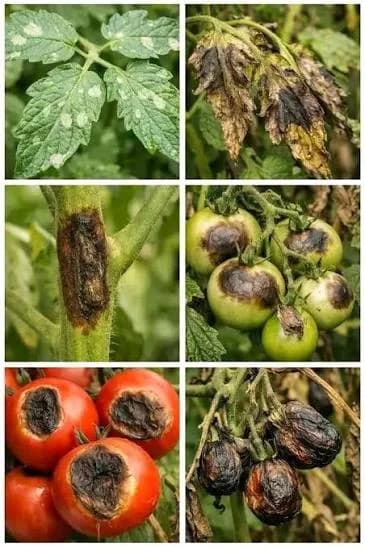
1. EARLY BLIGHT
Early blight is one of the common diseases that can affect tomatoes, particularly when environmental conditions favor the development of the disease.
Symptoms
Farmers may observe:
- Brown or dark spots on leaves.
- Circular or irregularly shaped lesions.
- Spots may develop concentric rings that resemble a target pattern.
- Lower leaves are often affected first.
- Leaves may turn yellow and eventually fall off.
- Lesions may also develop on stems.
- Fruits may develop rotting areas, especially near the stem end.
Conditions that favor the disease
- High humidity.
- Frequent rainfall.
- Leaves remaining wet for long periods.
- Infected plant residues left in the field.
- Overcrowded plants with poor air circulation.
Prevention and management
✓ Use healthy seeds or seedlings.
✓ Remove infected plant residues.
✓ Avoid irrigation practices that unnecessarily wet the foliage.
✓ Maintain appropriate spacing between plants.
✓ Inspect the field regularly.
✓ Use registered and appropriate crop-protection products based on professional advice.
2. LATE BLIGHT
Late blight can spread rapidly under conditions of high humidity, rainfall, and favorable temperatures.
Symptoms
The disease may affect:
- Leaves.
- Stems.
- Fruits.
Leaves may develop:
- Large greenish-brown to brown lesions.
- Dead areas.
- Water-soaked-looking areas.
Under humid conditions, infected areas may develop visible fungal growth.
Fruits may also develop large brown lesions and begin to rot.
Why is it dangerous?
The disease can spread quickly when environmental conditions are favorable and timely control measures are not taken.
Management steps
✓ Inspect the field regularly, especially during rainy periods.
✓ Remove severely infected plant parts where appropriate.
✓ Avoid unnecessary moisture on foliage.
✓ Maintain good air circulation within the crop.
✓ Follow an appropriate disease-prevention and control program with professional guidance.
Do not wait until the disease has spread throughout the field before seeking advice.
3. POWDERY MILDEW
This disease commonly appears as a white, powder-like growth on the leaves.
Symptoms
- White powdery growth on leaves.
- Leaves may turn yellow.
- Leaves may dry out and fall.
- Plant growth may become weak.
Prevention
✓ Monitor the crop for early symptoms.
✓ Avoid excessive plant crowding.
✓ Maintain good field sanitation.
✓ Use the appropriate crop-protection product after confirming the cause of the problem.
4. BACTERIAL WILT
Bacterial wilt is a disease that can cause tomato plants to wilt.
Symptoms
Farmers may observe:
- Plant wilting.
- Leaves wilting without necessarily developing large leaf spots.
- Plants appearing to suffer from water stress even when the soil contains sufficient moisture.
- Severe infection can eventually lead to plant death.
The bacteria responsible can be associated with soil and roots, making the disease difficult to manage once a field becomes heavily affected.
Prevention
✓ Use healthy seedlings.
✓ Avoid moving soil from infected fields to healthy fields.
✓ Maintain proper sanitation of farm tools.
✓ Practice crop rotation.
✓ Remove infected plants carefully and dispose of them safely.
Do not assume that every wilted tomato plant is suffering from a lack of water.
5. FUSARIUM WILT
Fusarium wilt is associated with fungi that can survive in the soil.
Symptoms
- Lower leaves begin to turn yellow.
- Plants start to wilt.
- Plant growth becomes reduced.
- Plants may become stunted.
- Severe infection can result in plant death.
Why is it challenging?
The disease-causing organisms can survive in the soil for long periods.
Prevention
✓ Use healthy seedlings.
✓ Practice crop rotation.
✓ Use resistant varieties where available.
✓ Avoid moving contaminated soil to other areas.
✓ Maintain good root and soil health.
6. BACTERIAL SPOT
This disease can affect leaves, stems, and fruits.
Symptoms
- Small spots on leaves.
- Leaves may become damaged as the disease progresses.
- Spots may appear on fruits.
- Fruits may develop abnormal-looking lesions.
Conditions that favor the disease
- Rainfall.
- High humidity.
- Frequent wetting of foliage.
- Infected seeds or seedlings.
Prevention
✓ Use healthy seeds and seedlings.
✓ Avoid working in the field when plants are excessively wet.
✓ Remove infected plant residues.
✓ Maintain good field sanitation.
7. TOMATO MOSAIC VIRUS
Viral diseases can cause significant changes in leaves and overall plant growth.
Symptoms
- Leaves develop a mixture of dark green and light green patterns.
- Leaves may curl or become distorted.
- Plants may become stunted.
- Fruits may develop poor or abnormal quality.
Important point
Viral diseases can be difficult to treat directly once a plant has become infected.
Therefore, prevention is more important than waiting until severe symptoms appear.
Prevention
✓ Use healthy seeds and seedlings.
✓ Maintain good sanitation of farm tools.
✓ Remove severely affected plants carefully.
✓ Control insect pests that may contribute to the spread of some viruses.
✓ Avoid handling diseased plants and then touching healthy plants without cleaning hands or tools.
8. TOMATO BACTERIAL CANKER
This disease can affect different parts of the tomato plant.
Symptoms
- Leaf wilting.
- Yellowing of leaves.
- Lesions on stems.
- Spots on fruits.
- Weak plants and reduced production.
Prevention
Good field sanitation is important.
✓ Use healthy seedlings.
✓ Avoid using contaminated farm tools.
✓ Remove infected plants using appropriate management practices.
✓ Do not move infected plant residues to other fields.
9. DAMPING-OFF
This problem is more common in seedling nurseries.
Symptoms
- Seedlings suddenly become weak.
- The stem near the soil surface becomes thin or rots.
- Seedlings collapse.
- Young seedlings may die.
Conditions that contribute to the problem
- Excessive watering.
- Poor drainage.
- Overcrowded seedlings.
- Poor nursery sanitation.
- Contaminated soil or equipment.
Prevention
✓ Use a clean nursery.
✓ Avoid excessive watering.
✓ Ensure proper drainage.
✓ Use quality seed.
✓ Avoid overcrowding seedlings.
10. ROOT ROT
Healthy roots are the foundation of a healthy tomato plant.
When roots are attacked by disease-causing organisms or remain in excessively wet soil, the plant may struggle to absorb water and nutrients properly.
Symptoms
- Stunted growth.
- Plant wilting.
- Yellowing leaves.
- Weak plant development.
- Discolored or rotting roots.
Prevention
✓ Ensure good field drainage.
✓ Avoid excessive irrigation.
✓ Maintain good soil health.
✓ Use seedlings with healthy root systems.
✓ Practice crop rotation where appropriate.
11. FRUIT ROT
Tomato fruits can be attacked by various disease-causing organisms, especially when fruits are injured or exposed to excessive moisture.
Symptoms
- Spots on fruits.
- Softening of affected areas.
- Fruit decay.
- Bad odors in some cases.
- Rot spreading from one fruit to another.
Prevention
✓ Avoid damaging fruits during field operations.
✓ Manage excessive moisture.
✓ Remove rotten fruits.
✓ Maintain good field sanitation.
✓ Store harvested tomatoes under appropriate conditions.
12. BLOSSOM END ROT
Blossom End Rot commonly appears as a dark or brown area on the bottom of the tomato fruit, opposite the stem end.
It is important to understand that this problem is not the same as a fungal or bacterial disease. It is commonly associated with inadequate calcium delivery to developing fruit, often influenced by factors such as inconsistent soil moisture.
Prevention
✓ Maintain consistent soil moisture.
✓ Avoid major fluctuations in soil moisture.
✓ Conduct soil testing.
✓ Maintain balanced plant nutrition.
✓ Do not automatically apply calcium without understanding the underlying cause of the problem.
WHY SHOULD FARMERS INSPECT THEIR TOMATO FIELDS REGULARLY?
Many tomato problems can produce similar symptoms.
For example, plant wilting can be caused by:
- Lack of water.
- Root rot.
- Fusarium wilt.
- Bacterial wilt.
- Root problems.
- Excessive salts in the soil.
- Other environmental factors.
Therefore, farmers should not rush to purchase pesticides simply because they observe one symptom.
Farmers should examine:
- Where on the plant did the symptoms begin?
- Is the problem affecting one plant or many plants?
- When did the problem begin?
- What have the weather conditions been like?
- How much moisture is in the soil?
- What condition are the roots in?
- Which fertilizers have been applied?
- Which crop-protection products have been used?
- Are insect pests present?
- How quickly is the problem spreading?
This information can help determine the possible cause of the problem and guide appropriate management.
AN INTEGRATED APPROACH TO TOMATO DISEASE MANAGEMENT
Farmers should not rely on pesticides alone. A better approach is to use Integrated Pest and Disease Management (IPDM).
1. Use healthy seeds and seedlings
Diseases can enter a farm through infected seed or seedlings.
2. Practice crop rotation
Avoid continuously planting tomatoes or closely related crops in the same field every season without considering appropriate rotation practices.
3. Maintain field sanitation
Remove:
- Infected leaves.
- Rotten fruits.
- Dead plants.
- Infected plant residues.
4. Manage irrigation
Water is essential for tomatoes, but excessive or poorly managed moisture can create conditions that favor certain diseases.
5. Maintain good air circulation
Proper plant spacing and appropriate pruning or canopy management can help reduce excessive humidity within the crop.
6. Manage insect pests
Some insect pests can contribute to the spread of certain viral diseases.
7. Use crop-protection products correctly
Do not select a pesticide simply based on the name of a disease or a single symptom.
First determine:
Is the problem caused by fungi, bacteria, viruses, insects, nutrient deficiencies, water management, or environmental conditions?
Then use a registered product that is appropriate for the identified problem, following the product label and professional advice.
MISTAKES TOMATO FARMERS SHOULD AVOID
❌ Waiting until the disease has spread before taking action.
❌ Applying pesticides without identifying the possible cause of the problem.
❌ Mixing several pesticides without professional advice.
❌ Using higher rates than recommended.
❌ Frequently wetting foliage unnecessarily.
❌ Planting crops too close together.
❌ Leaving infected plant residues in the field.
❌ Using seeds or seedlings from unreliable sources.
❌ Ignoring soil and root health.
❌ Assuming that every wilting tomato plant is caused by lack of water.
CONCLUSION
Successful tomato production requires more than planting seeds and applying fertilizer. Plant health, soil health, water management, nutrition, insect pests, and diseases must all be managed together.
Farmers who identify symptoms early have a better opportunity to take action before the problem spreads and causes serious losses.
Remember:
EARLY SYMPTOMS → CORRECT IDENTIFICATION → PROPER ADVICE → TIMELY ACTION
CHETU AGROSOLUTION — HELPING FARMERS SOLVE TOMATO PRODUCTION CHALLENGES
Are your tomatoes:
- Wilting?
- Developing spots on the leaves?
- Turning yellow?
- Developing rotten fruits?
- Showing poor growth?
- Experiencing root problems?
- Losing flowers?
- Developing unusual fruit symptoms?
- Showing symptoms that you cannot identify?
Do not wait until the problem becomes severe.
Visit CHETU AGROSOLUTION or contact us for assistance in identifying and addressing challenges affecting your tomato crop, together with professional advice on disease management, plant nutrition, fertilizers, and appropriate agricultural inputs.
We can advise farmers on:
✓ Identification and assessment of disease symptoms
✓ Tomato disease management
✓ Soil and root health
✓ Fertilizer and crop nutrition programs
✓ Insect pest management
✓ Disease prevention
✓ Proper selection and use of agricultural inputs
✓ Crop management programs according to the growth stage
CHETU AGROSOLUTION
Do not wait until your tomatoes are severely damaged before looking for a solution.
Contact CHETU AGROSOLUTION for support, advice, and appropriate agricultural inputs for tomato production.
Successful farming starts with correct identification and the right advice.