COTTON FARMING STEP BY STEP
By CHETU AGROSOLUTION · 6 October 2026

Cotton farming can provide a valuable source of income when it is properly planned and managed. However, cotton is not a crop that should simply be planted and left until harvest. Successful cotton production begins with proper field selection, quality seed, timely planting, correct spacing, balanced plant nutrition, timely weed control, regular pest and disease scouting, and proper harvesting and post-harvest handling.
At CHETU AGROSOLUTION, we encourage farmers to treat cotton farming as a business. Before planting, you should know:
How much land will you cultivate?
Which cotton variety is suitable for your area?
When does the rainy season normally begin?
What is the condition of your soil?
How much fertilizer will you need?
How will you control weeds?
How will you protect the crop from pests and diseases?
When will harvesting begin?
Where and how will you sell your cotton?
TARI continues to promote improved cotton production technologies in Tanzania, including 60 cm × 30 cm spacing, timely planting, proper pesticide use and timely weed management. TARI has reported significant productivity improvements among farmers who adopted these practices in some areas. These results should be viewed as evidence of the value of good agronomic management, not as a guaranteed yield for every farm.
1. START BY SELECTING THE RIGHT LAND FOR COTTON
Cotton performs best in land with:
Good soil fertility.
Good drainage.
Adequate moisture during crop development.
Good sunlight.
No prolonged waterlogging.
Good accessibility for planting, weeding, spraying and harvesting.
Avoid waterlogged fields
Standing water for long periods can damage the root system and increase the risk of root-related problems.
If your field has drainage problems, we recommend improving drainage before planting.
2. TEST YOUR SOIL BEFORE PLANNING FERTILIZER
This is one of the steps many farmers overlook.
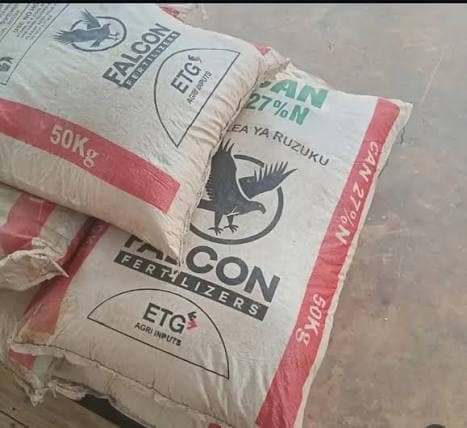
Before deciding whether to use Urea, DAP, NPK, CAN or another fertilizer, we recommend conducting a soil test.
A soil test can help determine:
Soil pH.
Nitrogen (N).
Phosphorus (P).
Potassium (K).
Organic matter.
Calcium.
Magnesium.
Micronutrients.
Other soil limitations.
TARI emphasizes the importance of soil and nutrient analysis in improving soil fertility and agricultural productivity.
In general
Cotton performs well in well-drained soils, with suitable soil pH commonly around the slightly acidic to neutral range. However, your own soil test should guide the final fertilizer and soil-management recommendations.
At CHETU AGROSOLUTION, we encourage farmers not to guess fertilizer requirements.
3. CHOOSE QUALITY COTTON SEED
Do not choose seed simply because it is cheap.
We recommend using:
Quality seed.
Certified or officially approved seed.
Seed suitable for your production area.
Seed appropriate for the growing season.
Varieties recommended for your local cotton-production system.
TARI continues to conduct research on improved cotton varieties and production technologies designed to increase productivity and quality.
4. HOW MUCH SEED IS REQUIRED PER ACRE?
Seed requirements depend on:
Variety.
Seed preparation.
Germination percentage.
Plant spacing.
Target plant population.
Planting method.
A commonly cited Tanzania cotton production guide gives approximately:
17–25 kg of seed per hectare
This is equivalent to approximately:
7–10 kg of seed per acre
However, farmers should always check the specific seed type and supplier recommendations before purchasing.
Do not determine your seed requirement based on kilograms alone. Consider the expected germination rate and the planting system.
5. FIELD PREPARATION
Begin preparing the field early, before the rainy season is fully established.
Steps:
Remove problematic weeds.
Manage previous crop residues appropriately.
Plough the field according to soil conditions.
Break large soil clods.
Level the field where necessary.
Improve drainage where required.
Apply well-decomposed manure or compost if needed.
Do not burn crop residues unnecessarily. Properly managed organic residues can contribute to soil organic matter and improve soil health.
6. FARMYARD MANURE OR COMPOST
If using manure, make sure it is well decomposed.
An indicative range from commonly cited cotton production guidance is approximately:
8–12 tonnes of manure per hectare
Equivalent to approximately:
3.2–4.9 tonnes per acre
However, the actual amount should depend on:
Manure quality.
Soil fertility.
Organic matter.
Soil-test results.
Previous cropping history.
Do not treat 3.2–4.9 tonnes per acre as a mandatory rate for every field because manure nutrient concentrations vary considerably.
7. COTTON PLANTING SPACING
One of the important technologies we emphasize is:
60 cm × 30 cm
This means:
60 cm between rows
30 cm between plants within the row
TARI has promoted this spacing in cotton-producing areas, with reported productivity improvements among farmers who adopted it together with other good agronomic practices.
Theoretical plant population
One acre contains approximately:
4,047 m²
With spacing of:
0.60 m × 0.30 m = 0.18 m² per plant
Therefore:
4,047 ÷ 0.18 ≈ 22,483 planting positions per acre
This is a theoretical calculation. Actual plant population will depend on:
Field layout.
Border spaces.
Pathways.
Germination.
Missing plants.
The actual planting system.
8. WHEN SHOULD COTTON BE PLANTED?
Planting time varies according to the cotton-producing area and the onset of reliable rainfall.
We recommend:
Do not plant too early before the soil has adequate moisture.
At the same time:
Do not delay planting after reliable rainfall has established the season.
Cotton needs sufficient moisture for germination and early root establishment.
TARI has specifically emphasized timely planting as one of the practices associated with improved cotton productivity.
Farmers should therefore monitor:
Rainfall.
Soil moisture.
Local extension recommendations.
The cotton-production calendar for their area.
9. HOW TO PLANT COTTON
Once the field is ready:
Mark rows at 60 cm intervals.
Mark planting positions at 30 cm intervals.
Make suitable planting holes or planting points.
Plant seed into adequate soil moisture.
Cover the seed with an appropriate amount of soil.
Avoid planting too deeply.
Ensure adequate moisture for germination.
Important
Do not plant into very dry soil while expecting rainfall that may take a long time to arrive.
10. THINNING AFTER GERMINATION
After cotton emerges, inspect the field for:
Missing plants.
Two or more plants growing in one position.
Weak plants.
Pest-damaged plants.
Diseased plants.
Where the planting system requires one healthy plant per position, thin excess seedlings at the appropriate stage.
The goal
Maintain a uniform and healthy plant stand.
Too many plants in one position create competition for:
Water.
Nutrients.
Light.
Space.
11. FILLING MISSING PLANTING POSITIONS
After emergence, identify gaps in the field.
Where the crop age and field conditions still allow it, fill missing positions at the appropriate time.
Do not wait too long because replacement plants may remain significantly behind the rest of the crop.
12. COTTON FERTILIZER MANAGEMENT: DO NOT FOCUS ONLY ON THE PRODUCT NAME
Farmer, we want to emphasize an important principle:
What matters is not only the number of kilograms of fertilizer applied, but the actual amount of nutrients supplied and required by the crop and soil.
Important nutrients for cotton include:
Nitrogen (N)
Phosphorus (P)
Potassium (K)
Sulphur (S)
Calcium (Ca)
Magnesium (Mg)
Boron (B)
Zinc (Zn)
The actual requirement varies according to soil conditions and production targets.
13. INDICATIVE NUTRIENT RANGES
Different production guides and research programs use different fertilizer recommendations depending on soil type, environment and yield target.
Indicative blanket recommendations cited for cotton production in East Africa have included approximately:
N: 20–60 kg/ha
P: 15–30 kg/ha
K: 30–40 kg/ha
These are general reference ranges and not a fertilizer prescription for every Tanzanian farm. Soil-test results should take priority. Research in Tanzania also highlights the need to account for differences among cotton-growing soils and environments.
14. EXAMPLE OF NITROGEN CALCULATION PER ACRE
One commonly cited cotton production guide gives approximately:
65 kg N/ha
This is approximately:
26 kg actual N per acre
Remember:
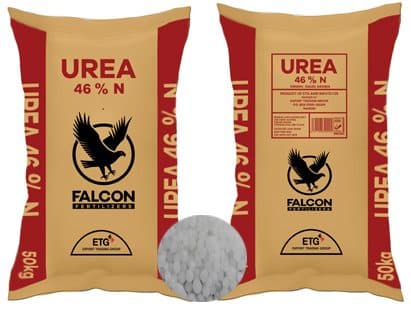
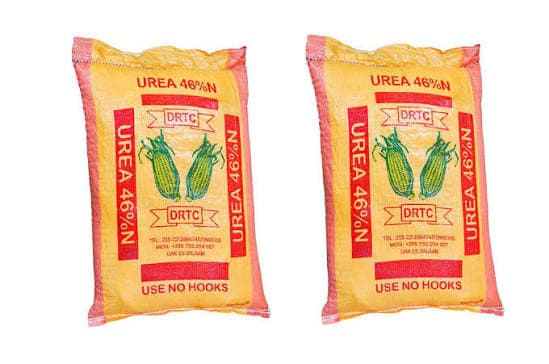
26 kg N does NOT mean 26 kg of Urea.
If using Urea containing:
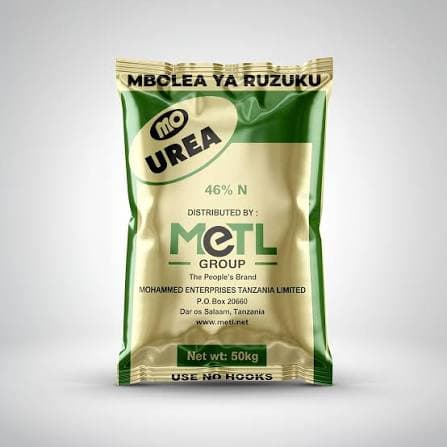
46% N
The calculation is:
26 ÷ 0.46 = approximately 56.5 kg Urea per acre
Therefore, as a mathematical example:
Approximately 56–57 kg Urea per acre = 26 kg actual N
However, we do not recommend applying this amount automatically to every acre. The actual rate should be determined by soil condition, previous crop, fertilizer program, crop performance and local agronomic recommendations.
15. HOW TO SPLIT NITROGEN APPLICATIONS
Avoid applying all nitrogen at one time.
Under a split-application approach, nitrogen can be divided into stages according to crop development.
For example, if the total planned amount is:
56 kg Urea per acre
It could mathematically be divided into two equal applications:
First application — 50%
Approximately:
28 kg Urea per acre
Second application — 50%
Approximately:
28 kg Urea per acre
Some cotton production guidance recommends top-dressing nitrogen in two stages, around six weeks after emergence and approximately one month later. The exact timing should be adjusted according to crop development and local recommendations.
16. PHOSPHORUS
Phosphorus is important for:
Root development.
Early crop establishment.
Early plant growth.
Branch development.
Overall crop development.
One commonly cited cotton production guide gives approximately:
23 kg P₂O₅/ha
Equivalent to about:
9.3 kg P₂O₅ per acre
This is a reference example, not a universal recommendation.
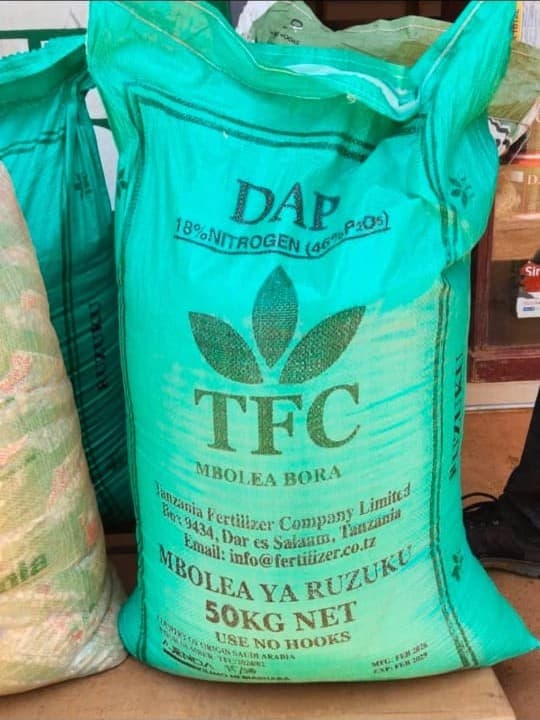
Example using DAP
DAP is commonly formulated as:
18-46-0
Therefore, 100 kg of DAP contains approximately:
18 kg N
46 kg P₂O₅
0 kg K₂O
If a field actually required 9.3 kg P₂O₅:
9.3 ÷ 0.46 = approximately 20.2 kg DAP per acre
But if your soil test shows adequate or high phosphorus, you may require much less phosphorus or none at all.
17. POTASSIUM
Potassium contributes to:
Water regulation within the plant.
Plant strength.
Reproductive development.
Nutrient-use efficiency.
Overall crop performance.
Potassium requirements should preferably be guided by soil testing.
Do not apply large amounts of potassium simply because it is commonly used in cotton.
18. EXAMPLE FERTILIZER PROGRAM FOR ONE ACRE
Before planting
Well-decomposed manure/compost:
Approximately 3.2–4.9 tonnes per acre where needed, based on the broader 8–12 t/ha reference range.
Phosphorus:
Apply according to soil-test results.
After establishment
Nitrogen:
Begin top-dressing after plants are properly established.
Around six weeks after emergence
Apply the planned portion of nitrogen where required.
Approximately one month later
Apply the remaining portion where crop condition and the fertilizer plan indicate a need.
This is a management framework, not a mandatory formula for every acre.
19. HOW TO APPLY FERTILIZER CORRECTLY
Do not place Urea or other concentrated fertilizer directly against the plant stem.
Place fertilizer at an appropriate distance from the plant and incorporate it into the soil where appropriate.
Avoid:
Fertilizer touching the stem.
Applying concentrated fertilizer into extremely dry soil without adequate moisture.
Placing large amounts in one spot.
Mixing fertilizers without checking compatibility.
Applying fertilizer without understanding its formulation.
20. FIRST WEED CONTROL
Weeds are among the major challenges in cotton production.
Weeds compete with cotton for:
Water.
Nitrogen.
Phosphorus.
Potassium.
Light.
Space.
TARI has emphasized timely weed control as one of the practices associated with improved cotton productivity.
Our recommendation:
Do not wait until weeds become large and difficult to control.
Begin weed management early.
21. WEEDING SCHEDULE
First weeding
Control weeds early, before they compete strongly with cotton.
Second weeding
Repeat when new weeds emerge.
Third weeding
Carry out where necessary depending on field conditions.
The number of weeding operations depends on:
Soil type.
Rainfall.
Weed species.
Production system.
Effectiveness of earlier weed control.
22. USING HERBICIDES
If you use herbicides:
Identify the weeds present.
Select a product registered for the intended use.
Read the product label.
Use the recommended rate.
Wear appropriate PPE.
Avoid contact with non-target cotton plants.
Follow the permitted crop growth stage.
Do not mix products unless compatibility and label directions support the mixture.
Important
Do not use a herbicide simply because your neighbor used it.
Weed species, crop stage and field conditions may be different.
23. IMPORTANT COTTON PESTS
Cotton can be attacked by various insect pests, including:
1. Aphids
They feed on plant sap and can affect young plant tissues.
2. Whiteflies
They can weaken plants and may be associated with the transmission of some viral diseases.
3. Thrips
They can damage young plant tissues and affect crop development.
4. Bollworms
These are particularly important because they can attack flowers and cotton bolls.
5. Cotton stainers
They can damage developing bolls and seeds.
6. Cutworms
They can cut young seedlings near the soil surface.
24. DO NOT SPRAY WITHOUT SCOUTING
We strongly emphasize:
Do not see one insect and immediately spray the entire field without scouting.
Walk through your field.
Inspect:
Upper leaves.
Lower leaves.
Growing points.
Flowers.
Bolls.
Stems.
Lower parts of plants.
Look for:
Pest numbers.
Damage symptoms.
Eggs.
Larvae.
Adult insects.
Disease symptoms.
25. INTEGRATED PEST MANAGEMENT — IPM
We recommend Integrated Pest Management (IPM).
This includes:
Quality seed.
Timely planting.
Correct spacing.
Field sanitation.
Weed control.
Regular scouting.
Using pesticides when necessary.
Rotating modes of action where appropriate.
Conserving beneficial organisms where possible.
Avoiding unnecessary pesticide applications.
TARI also promotes IPM and environmentally friendly approaches to pest and disease management.
26. COTTON DISEASES
Farmers should watch for symptoms such as:
Wilting.
Leaf spots.
Root rot.
Stem rot.
Leaf discoloration.
Stunted growth.
Damaged or rotting bolls.
Possible causes include:
Fungi.
Bacteria.
Viruses.
Root damage.
Excessive moisture.
Nutrient deficiencies.
Insect damage.
Our principle:
Diagnose the problem first, then choose the solution.
Do not automatically apply a pesticide every time a plant shows yellowing or wilting.
27. ROOT HEALTH
Healthy roots are the foundation of a healthy cotton crop.
We recommend:
Avoiding prolonged waterlogging.
Improving drainage.
Avoiding unnecessary root damage during weeding.
Using quality seed.
Managing soil-borne diseases.
Maintaining soil fertility.
Avoiding excessive fertilizer concentrations around the roots.
28. WATER MANAGEMENT
Cotton requires adequate moisture during important growth stages, but prolonged waterlogging can be harmful.
For rain-fed cotton, farmers should plan planting according to:
Beginning of rainfall.
Total rainfall.
Rainfall distribution.
Soil type.
Soil water-holding capacity.
For irrigated cotton, water requirements should be adjusted according to:
Soil type.
Temperature.
Crop age.
Evapotranspiration.
Growth stage.
Avoid:
Excessive irrigation + poor drainage.
This combination can damage roots and reduce crop performance.
29. VEGETATIVE GROWTH STAGE
After emergence and establishment, monitor:
Plant height.
Number of branches.
Leaf color.
Root health.
Weed pressure.
Pest pressure.
Disease symptoms.
Do not automatically increase nitrogen whenever plants appear to be growing slowly.
First ask:
Is there enough moisture?
Are the roots healthy?
Are insects present?
Is soil pH suitable?
Is phosphorus available?
Is drainage adequate?
30. FLOWERING AND REPRODUCTIVE DEVELOPMENT
As cotton enters reproductive growth, crop requirements change.
At this stage:
Continue scouting.
Control weeds.
Monitor pests.
Maintain balanced nutrition.
Avoid excessive nitrogen.
Avoid severe water stress.
31. BOLL DEVELOPMENT
Boll development is one of the most important stages in cotton production.
Farmers should protect:
Flowers.
Young bolls.
Healthy leaves.
Roots.
Soil moisture.
Boll-feeding insects can cause significant losses if they are not detected early.
32. REDUCING PEST DAMAGE
Scout regularly
Do not wait until damage becomes severe.
Remove pest sources
Manage weeds and other plants that may serve as pest hosts.
Use pesticides correctly
Use registered products that are appropriate for the confirmed pest problem.
Rotate modes of action
Avoid repeatedly using the same pesticide group without a resistance-management strategy.
33. SAFE PESTICIDE USE
Before applying any pesticide:
Identify the pest or disease.
Read the label.
Confirm that the product is registered for the intended use.
Apply the recommended rate.
Wear appropriate PPE.
Follow the pre-harvest interval (PHI).
Do not mix products without appropriate guidance.
Avoid spraying during strong winds.
Store pesticides safely.
Never use pesticide containers for storing food or drinking water.
34. MEASURING PESTICIDES
Do not measure pesticides using:
Soda bottle caps.
Uncalibrated cups.
Ordinary bottles.
Guesswork.
Use:
A calibrated measuring cylinder or measuring cup.
If the label says:
X mL per 20 litres of water
do not estimate the amount.
Follow the label exactly.
35. EXAMPLE OF SPRAYER CALCULATION
Suppose your sprayer holds:
20 litres
and calibration shows that you use:
200 litres per acre
Then:
200 ÷ 20 = 10 tankfuls per acre
Therefore, if the pesticide label gives a recommended amount per acre, you can divide that amount across the 10 tankfuls after confirming proper calibration.
Important
This is only a calculation method.
The actual pesticide rate must come from the label of the registered product being used.
36. SPRAYER CALIBRATION
Before spraying:
Fill the sprayer with clean water.
Spray a known area.
Measure how much water was used.
Calculate water volume per acre.
Adjust pressure and nozzle selection.
Only then prepare the pesticide mixture.
Proper calibration helps prevent:
Overdosing.
Underdosing.
Wasted pesticide.
Crop injury.
Unnecessary production costs.
37. CONTROL WEEDS BEFORE THEY PRODUCE SEED
Do not allow weeds to remain until they produce large quantities of seed.
Those seeds can create a much larger weed problem in the following season.
Our message:
A clean field today makes the next season easier to manage.
38. INTERCROPPING
In some farming systems, cotton can be intercropped with crops such as:
Beans.
Groundnuts.
Cowpeas.
However, intercropping must consider:
Spacing.
Water competition.
Nutrient requirements.
Weed management.
Pest pressure.
Market demand.
TARI has conducted trials involving cotton intercropped with legumes such as beans, groundnuts, cowpeas and green grams in some parts of Tanzania.
Do not intercrop without a clear spacing and management plan.
39. COTTON HARVESTING
Cotton should be harvested when bolls open and the lint is mature and ready.
We recommend:
Harvest fully opened cotton.
Keep clean cotton separate from trash.
Avoid mixing wet cotton with dry cotton.
Keep leaves and plant debris out of harvested cotton.
Use clean harvesting containers.
Store harvested cotton in a dry environment.
40. MULTIPLE PICKINGS
Cotton does not usually open all at once.
Therefore:
Inspect the field regularly.
Pick mature, opened bolls as they become ready.
Do not leave mature cotton in the field unnecessarily because it may be affected by:
Rain.
Moisture.
Dirt.
Insects.
Quality deterioration.
41. COTTON QUALITY AFTER HARVEST
Cotton quality can be affected by:
Soil.
Leaves.
Water.
Oil.
Plastic.
Grass.
Plant residues.
Excess moisture.
Therefore:
Never mix trash with cotton.
Farmers who want to protect cotton quality must begin protecting that quality in the field.
42. AFTER HARVEST
After harvesting:
Clean the field appropriately.
Manage crop residues properly.
Control volunteer plants and alternative pest hosts where necessary.
Plan the next crop.
Practice crop rotation where appropriate.
Review production costs and yields.
Keep records of the season.
43. KEEP FARM RECORDS
Farmer, we recommend keeping a farm record book.
Record:
Planting date
Seed variety
Quantity of seed used
Area planted
Fertilizer quantity
Fertilizer type
Fertilizer application dates
Pesticides used
Pests identified
Diseases identified
Production costs
Quantity harvested
Selling price
These records will help you determine whether your cotton enterprise is profitable and where improvements are needed.
44. COTTON FARMING SCHEDULE — SUMMARY
| Stage | Main Activity |
|---|---|
| Before the season | Market planning, budgeting, seed selection, soil testing |
| Field preparation | Land preparation and drainage |
| Before planting | Manure/compost and basal fertilizer according to soil test |
| Planting | 60 × 30 cm where appropriate and recommended |
| After emergence | Thinning and gap filling |
| Early growth | Weeding and scouting |
| Vegetative growth | Nutrition, weed, pest and disease management |
| Around 6 weeks | Nitrogen top-dressing according to the crop plan |
| About one month later | Second nitrogen application where required |
| Flowering | Protect flowers and maintain balanced crop nutrition |
| Boll development | Intensive scouting and crop protection |
| Boll opening | Begin harvesting |
| After harvest | Field sanitation and farm record analysis |
Actual timing varies according to variety, location, rainfall, temperature and production system.
45. 15 COMMON MISTAKES COTTON FARMERS SHOULD AVOID
1. Planting without a market plan
Know your target market before planting.
2. Using unknown seed
Use quality seed suitable for your area.
3. Incorrect spacing
Follow the recommended spacing for your production system.
4. Planting too late
Plant according to the appropriate seasonal window.
5. Not testing the soil
Do not guess soil fertility.
6. Applying fertilizer without a plan
Nutrient application should match crop and soil requirements.
7. Applying excessive nitrogen
Too much nitrogen can promote excessive vegetative growth and disturb the balance between vegetative and reproductive development.
8. Delaying weed control
Control weeds early.
9. Spraying without scouting
Identify the problem first.
10. Using guessed pesticide rates
Follow the product label.
11. Failing to use PPE
Protect your health.
12. Ignoring boll-feeding pests
Scout throughout the production cycle.
13. Leaving mature cotton in the field
Harvest at the appropriate time.
14. Mixing cotton with trash
Protect cotton quality.
15. Keeping no records
Record your costs, inputs, yields and sales.
46. HOW MUCH COTTON CAN ONE ACRE PRODUCE?
This is an important question, but we want to answer it carefully.
Yield cannot be guaranteed with one number for every farmer.
It depends on:
Variety.
Rainfall.
Soil.
Fertilizer.
Plant spacing.
Weed control.
Pest management.
Disease management.
Planting time.
Crop management.
Farmer skills.
TARI has reported examples of farmers achieving major productivity improvements after adopting technologies such as 60 cm × 30 cm spacing and other improved agronomic practices. However, results from one farmer or location should not be interpreted as a guaranteed yield for every farm.
Therefore, our advice is:
Do not focus only on cultivating more acres.
Focus on managing the acres you cultivate properly.
TARI has also highlighted the importance of farmers concentrating on land that they can manage effectively rather than opening up large areas that cannot receive proper agronomic management.
47. A PROFESSIONAL ONE-ACRE COTTON FARMING PLAN
For a farmer cultivating one acre, we recommend the following approach:
STEP 1
Test the soil.
STEP 2
Obtain quality seed suitable for your area.
STEP 3
Prepare the field early.
STEP 4
Plan spacing of 60 × 30 cm, where this technology is recommended for your area.
STEP 5
Develop a fertilizer plan based on soil-test results.
STEP 6
Plant at the appropriate time.
STEP 7
Thin and fill missing stands early.
STEP 8
Begin weed control early.
STEP 9
Scout the field regularly every week.
STEP 10
Manage pests and diseases correctly.
STEP 11
Apply nitrogen in split applications where required.
STEP 12
Protect flowers and developing bolls.
STEP 13
Harvest mature cotton on time.
STEP 14
Protect cotton quality after harvesting.
STEP 15
Calculate production costs and returns.
48. OUR ADVICE TO COTTON FARMERS
Farmer, do not grow cotton based only on tradition.
Agricultural technologies continue to evolve, and TARI continues research on cotton varieties, soil fertility, pests, diseases, production systems and technologies for improving cotton productivity and sustainability.
At the beginning of every season, ask yourself:
What is the condition of my soil?
Which seed variety am I using, and is it suitable for my area?
What spacing should I use?
How much fertilizer does my soil and crop actually require?
How will I control weeds?
How often will I scout for pests?
What will I do if a pest or disease problem appears?
When will I harvest?
Where will I sell my cotton?
That is where commercially managed cotton production begins.
49. HOW CHETU AGROSOLUTION CAN SUPPORT YOU
At CHETU AGROSOLUTION, we believe farmers should not simply purchase agricultural inputs without understanding how to use them correctly.
We support farmers with:
Seed selection.
Fertilizers.
Crop protection products.
Pest identification.
Disease identification.
Proper input-use guidance.
Crop production schedules.
Farm management advice.
Plant nutrition guidance.
Support in addressing production challenges.
For agricultural inputs and professional agronomic support, visit:
CHETU AGROSOLUTION — chetuagro.com
CONCLUSION
Farmer, successful cotton farming does not begin on harvest day.
It begins before planting.
Choose the right land → test the soil → select quality seed → prepare the field → plant at the correct spacing → manage nutrition correctly → control weeds on time → scout regularly → manage pests and diseases correctly → protect flowers and bolls → harvest on time → protect cotton quality → evaluate the business.
Our message to you is simple:
Do not aim to cultivate a large area that you cannot manage properly.
Aim for productive, well-managed acres.
CHETU AGROSOLUTION
Better Agricultural Inputs. Better Harvests. Better Lives.